


Half of All Container Ships Arrive Late. Contracts Can't Fix That.

Half of all container ships arrived late in September. The figure comes from Sea-Intelligence: schedule reliability for the top 13 container lines stood at 50.6%. It rose 0.9 points from August, after three straight months of decline. That counts as good news. A shipper at TOC Asia in Singapore put it bluntly: reliability will not improve much. It will sit at 50%, 55%, 60% at best. And no contract can force a carrier to do better.
The numbers
The gap between the best and worst carrier is the story. Maersk delivered nearly two of every three ships on time. Wan Hai delivered about one in four. Pick the wrong line and your cargo is late three times out of four. Pick the right one and it still arrives late a third of the time.
Why contracts don't help
Jaya Moorthi runs logistics for Schneider Electric across the Middle East, Africa, South Asia, the Pacific, and India. He spoke at TOC Asia in Singapore. His point was simple. Every year brings a new crisis. Covid. The Red Sea. Tariffs. War. "I haven't seen a carrier who comes and sits down and says, 'I will seek to do better'," he said. "Ocean freight is becoming a very unenforceable contract over time."
Vincent Chew, a container shipping consultant at Drewry, agreed. Performance is hard to put into contracts now. Reliability is too low. His advice to cargo owners: stop trying to enforce it. Start de-risking instead.
That leaves shippers with an "enormous challenge," in Moorthi's words. If reliability runs at 50% and you need the equivalent of 70%, you hold more stock. You build a buffer in each country or region. That buffer costs money. And the cost passes to the customer.
What shippers do instead
Schneider found one lever that works: multimodal. Port congestion hit major Chinese ports hard this year. In some cases the company switched legs of a journey to rail or other modes. Transit fell from 60 days to 42. "We did quite a lot in 2026 to be honest," Moorthi said.
Sogese, the Italian logistics firm, draws the same lesson for 2027 contracts. Its November market update warns that the return to shorter Suez routings is moving faster than any improvement in reliability. Shippers should weigh routing flexibility, surcharge conditions, and service performance — not just the headline freight rate.
The pattern is clear. The contract will not save the shipment. The plan around the contract will.
What you can do with SeaVantage
Reliability is a fact to plan around, not a promise to collect on. That is where live data earns its keep.
Compare carriers before you book. Schedule Insight searches port pairs and compares carriers on reliability and transit time from real voyages. Maersk at 64.8% and Wan Hai at 26.7% is a 38-point gap. That gap is a decision. Check it before the booking, not after the delay.
Watch the actual vessel, not the schedule. Ship Insight tracks vessels by name, IMO, or MMSI, with live AIS position, ETA, and port calls. A service name tells you what the carrier planned. The live position tells you what is happening.
Spot the at-risk box early. Cargo Insight tracks containers by B/L, booking, or container number, with milestone updates and delay-risk signals. Its PTA works as an earlier, complementary signal alongside the carrier ETA — never a replacement, never a claim of better accuracy. The point is time: an early signal lets you warn the customer, reroute, or adjust stock before the delay becomes a missed delivery. Read how the two signals work together in ETA vs PTA in container shipping and how to read SeaVantage's PTA and carrier ETA in real-world scenarios.
Check the port before the ship gets there. Port Insight shows congestion, schedules, waiting times, and port-call records. Global port congestion tracking gives the same view across ports. A late vessel that then waits days at a full terminal costs twice. Durban's 15-day queue showed how fast that compounds. The port congestion playbook explains why yards fill and how to plan around them.
For the wider picture, see how real-time container tracking tools reduce ocean freight delays, cargo shipping delay causes and solutions, mass vessel rerouting and global port congestion, the ocean freight peak season 2026 playbook, the modern ocean freight playbook, and how geopolitics will reshape global shipping in 2026.
FAQ
What is schedule reliability in container shipping?
It is the share of vessels that arrive on time. Sea-Intelligence tracks the top 13 container lines. In September 2026 the figure was 50.6%. That means about half of all ships arrived late.
Which carrier was most reliable in September 2026?
Maersk, at 64.8%. Wan Hai was least reliable, at 26.7%. The gap between best and worst was 38 points. Carrier choice matters more than the average suggests.
Why can't shippers enforce reliability in contracts?
Carriers offer no guarantees on transit times. Delays come from weather, congestion, conflict, and network changes — forces outside any one contract. Shippers at TOC Asia said no cargo owner they know has enforced a reliability clause. Drewry advises clients to de-risk instead of litigating.
How bad are delays on Asia–Europe right now?
Bad. Xeneta found only 4% of Far East–Europe vessel arrivals on time in September 2026. Average delay reached 9.9 days. Globally, 27% of containers arrived on time in the third quarter, and late ones averaged six days behind.
What should shippers do when reliability sits near 50%?
Plan for the delay, not against it. Compare carriers on real voyage data before booking. Hold buffer stock where it matters most. Use multimodal options where they cut transit time. And watch the actual vessel and container live, so the first delay signal triggers action — not the customer's phone call.
Does live tracking fix schedule reliability?
No. Tracking cannot make a ship arrive on time. It can tell you early that it will not. That early warning is the difference between a planned workaround and a missed delivery. Pair the carrier ETA with an earlier complementary signal, check congestion at the destination port, and act while options still exist.
Related reading
- ETA vs PTA in Container Shipping
- How to Read SeaVantage's PTA and Carrier ETA in Real-World Scenarios
- How Real-Time Container Tracking Tools Reduce Ocean Freight Delays
- Cargo Shipping Delay Causes and Solutions
- Mass Vessel Rerouting Is Triggering Global Port Congestion
- Durban Port Congestion November 2026: Maersk's $1,000 Surcharge and a 15-Day Queue
The takeaway
Half the ships arrive late. The best carrier still misses a third of the time. The worst misses three in four. No contract fixes that. Shippers who cope best do three things: pick the carrier on real performance, not the rate card; watch the vessel and the box live; and act on the first delay signal. Reliability will not improve much. Your response to it can.


팬스타 아크로호가 지난 8월 22일 북극항로 시범운항을 시작했습니다. 국내 최초 컨테이너선 북극항로 운항 현황과 상업성 검증 항목, 화주·포워더가 주목할 사항을 정리합니다.
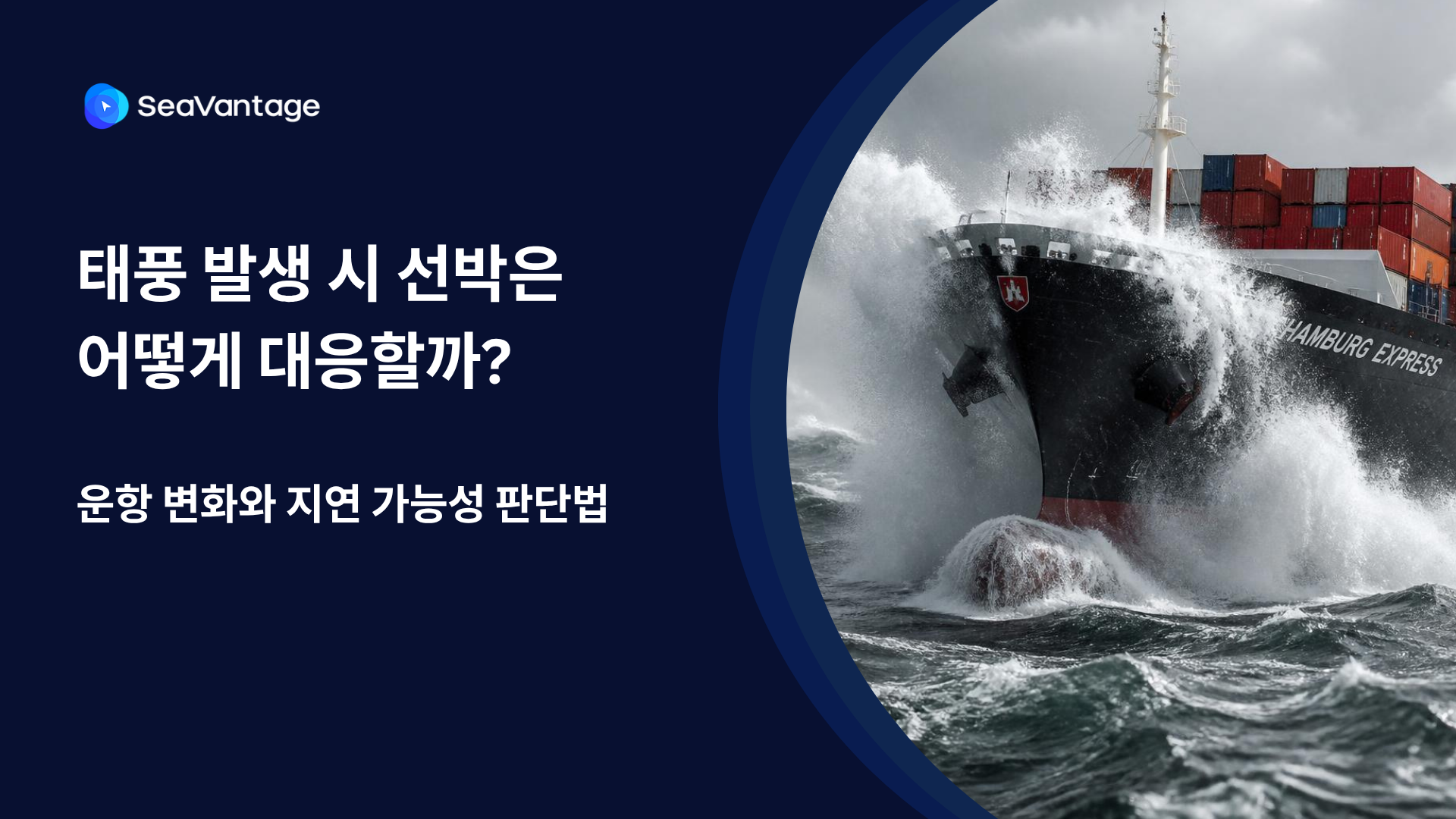
태풍 발생 시 선박은 우회·감속·대기 등 서로 다르게 대응합니다. AIS 항적과 ETA·PTA·PTB, 항만 혼잡 데이터를 활용해 해상운송 지연 가능성을 판단하는 방법을 알아보세요.
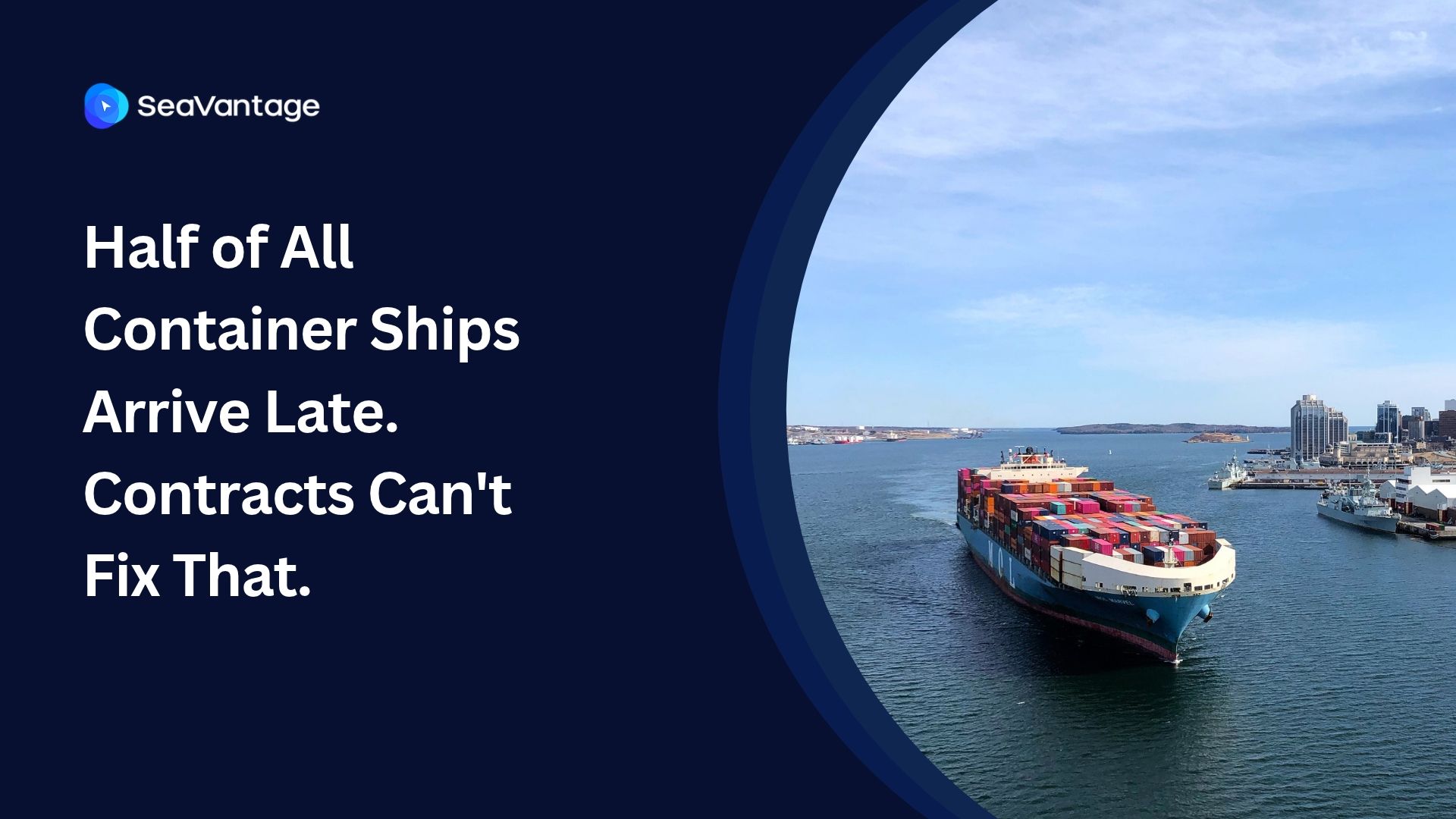
Half of all container ships arrived late in September. Contracts can't enforce on-time delivery. Here's how shippers de-risk schedules anyway.

MSC's CEO calls port congestion the new normal. Over 4.3m TEU sat stuck in August — a record. What shippers should do when delays stop being the exception.

Durban's queue hit 15 days and Maersk's peak season surcharge quadrupled to $1,000 per 20ft on Nov 9. What it costs, and how tracking helps.


