


Durban Port Congestion November 2026: Maersk's $1,000 Surcharge and a 15-Day Queue

Durban is running 15 days behind. Maersk quadrupled its peak season surcharge on Far East cargo to South Africa on 9 November — $1,000 per 20ft, $2,000 per 40ft, up from $250 and $500. A separate Durban congestion fee adds $400 per 20ft on China-origin cargo. Together, the two charges add $1,400 to a 20ft box. The sailing time has not changed. The queue has. Port Insight shows the congestion, the waiting times, and the port-call records before you book into it.
The November surcharges at a glance
The charges are per container, not per tonne. A half-filled 20ft pays the same $1,400 as a full one. The Maersk peak season surcharge runs until further notice, and it is collected at origin unless different payment terms are selected. Confirm the trigger date and the price calculation date with the carrier before you commit — the announcement does not settle every case on its own.
Why Durban is still 15 days deep
Durban has not recovered from the August switch of Durban Gateway Terminal — the former Pier 2 — to ICTSI operation and the Navis N4 terminal system. Volumes at the terminal fell roughly 30% between 14 August and 10 September against the previous four-month average. The backlog outlived the switch.
The numbers, as of the first week of November:
- The port-wide planning indicator stood at 15 days in the BUSA Cargo Movement Update of 3 November, up a day on the previous week. Cape Town was at 5 days, Coega at 4, Port Elizabeth at 1.
- Container vessels averaged 7.46 days at anchorage in the seven days to early November, with average arrival delays of 6.02 days and departure delays of 5.59 days.
- Seventeen container vessels were waiting for Durban on 2 November — six inside the designated anchorages and eleven further offshore — representing roughly 85,000 TEU afloat. The 9,326 TEU APL Charleston had been waiting since 21 October.
- Durban Gateway Terminal handled 34,976 TEU in the week to 1 November, up 12%, yet anchorage time at the terminal stayed above 11 days, with about 35,000 container moves still outstanding and stack occupancy at 65%.
No one promises a fast fix. Transport Minister Barbara Creecy told the industry in late October that the terminal may return to its former operating performance between December 2026 and February 2027. The South African Association of Freight Forwarders puts the standing queue at about 19.5 days of added supply chain time, and notes that clearing it within 30 days would need roughly 5,000 moves a day against a 3,400-move target. Kuehne+Nagel's read is blunter: no meaningful improvement before the end of Q1 2027.
What a container from China to South Africa costs now
The freight rate barely moved. The surcharge layer did. All-in ocean, November 2026, Maersk, China origin:
Origin charges add roughly $250–$450 per container. Destination charges add roughly $350–$600. On a worked example — a 20ft of furniture, FOB $10,000, Shenzhen to a Johannesburg warehouse — the two November surcharges alone come to $1,400. That is 7% of the $19,359 total landed cost and 14% of the goods value. It arrived with eleven days' notice.
Door to door to Johannesburg now runs 38–55 days through Durban, against 26–35 days in a normal year. Sailing time from Shanghai or Ningbo is 18–26 days. Then add 7–15 days at anchorage, 2–4 days of terminal handling, and 2–5 days of clearance if the documents are in order.
Durban vs Cape Town: the port trade-off
Cape Town's terminal is running better than Durban's this month. In the week to 1 November, Cape Town Container Terminal handled 18,886 TEU — up 76%, 126% of target — with average anchorage of one hour and 42 hours at berth. Ngqura handled 18,257 TEU, with anchorage down from 53 to 21 hours. National throughput rose 20% to 100,423 TEU.
The decision is not that simple. The ocean saving is small. The road leg is not.
A 20ft diverted from Durban to Cape Town saves $100–$400 on the ocean leg but adds roughly $600–$850 on the road leg to Gauteng. What it buys is 10–14 days of schedule certainty. That is worth real money if the box would otherwise sit at anchor while terminal storage runs at about ZAR 2,533 a day on a 20ft after three free days, with carrier detention starting after the free period. What is not working at the Cape is the road and rail capacity to move cargo inland — that is now the constraint on routing Gauteng-bound boxes through Cape Town.
The date that decides what you pay
The effective dates are not the sailing dates. Each carrier prices off a different event.
- Maersk the level is fixed by the price calculation date — the scheduled departure of the first water leg at the time of booking confirmation. A later actual departure does not move it. A booking confirmed on 6 November for a 7 November first leg keeps the old $250/$500 level. The same booking confirmed for a 12 November leg pays $1,000/$2,000. Same cargo, same carrier, $750 more on a 20ft.
- Hapag-Lloyd the level depends on the date the cargo is loaded on board. A delayed gate-in that pushes stuffing by two days can move you into the new window.
- CMA CGM loading date again, with separate Far East-to-Durban and China-to-South Africa notices running at the same time. The carrier has not published how the two notices interact, so ask which level applies to your booking rather than adding them together.
Put the price calculation date in writing. Ask for the named vessel, the first water-leg date, and the surcharge level in the quote — not just the total.
Three ways tracking cuts the exposure
1. See the queue before you book the port
Port Insight shows congestion, schedules, waiting times, and port-call records. Check Durban before you book Durban. Compare it with Cape Town and Ngqura on the same screen. A port at 15 days and a port at 5 days are not the same booking decision, even when the ocean freight looks the same. Check global port congestion across the route, not just at destination — a congested transshipment port adds the same delay upstream.
2. Watch the vessel, not just the service name
Ship Insight tracks vessels by name, IMO, or MMSI, with live AIS position, ETA, and port calls. Seventeen vessels waited off Durban on 2 November. One of them had waited since 21 October. If the ship carrying your cargo is anchored offshore, the booking confirmation date no longer matters — the arrival date does. Live position shows whether the vessel is moving, slowing, or queuing. A service name on a booking cannot tell you that.
3. Act on the early signal, not the official update
Cargo Insight tracks containers by bill of lading, booking, or container number, with milestone updates at every leg. It shows carrier ETA and SeaVantage PTA side by side. The PTA is a continuously recalculated estimate built from live vessel movement and operating conditions. It is not a replacement for the carrier's official ETA. It is a complementary signal. When the PTA moves later than the ETA, treat it as an early warning: pre-check trucking, hold warehouse flexibility, draft the customer note. Do not wait for the official update to catch up.
The same logic applies at the terminal. Cargo Report inside Cargo Insight shows dwell across active shipments in 0–4, 5+, 10+, and 15+ day brackets, with ATA versus Gate Out and free-time comparison in one view. A box in the 10+ bracket gets attention before free time expires. A box found at invoice time is already a charge. See also: how to avoid demurrage charges in 2026.
One timing note: Maersk has temporarily raised import detention free time at all Durban terminals from four to five days, valid until 31 December 2026, with the standard four days resuming on 1 January. Confirm it on your booking, not on the advisory.
A short checklist before you book
- Check the dates. Maersk's PSS starts 9 November (10 November for Vietnam origin). The congestion fee started 1 November (8 November for Korea and Taiwan). Hapag-Lloyd's PSS started 3 November.
- Check the price calculation date. Get the named vessel, the first water-leg date, and the surcharge level in writing. Two days of difference can move a 20ft by $750.
- Check the port. Look at Durban congestion in Port Insight before you route through it. Compare Cape Town and Ngqura on cost and on time.
- Check the vessel. Confirm the actual operating vessel and its live position in Ship Insight — not just the service name on the booking.
- Check the PTA against the ETA. If the predicted arrival drifts later than the official ETA, pre-check trucking and warehousing now. Do not wait for the carrier update.
- Plan the Chinese New Year cut-off now. Chinese New Year falls on 6 February 2027. Factories slow from mid-January. With 38–55 days door to door through Durban, cargo that must be on shelf in March has to sail by early January — which means booking in the first half of December, during the current surcharge regime.
Frequently asked questions
What is Maersk's peak season surcharge to South Africa from 9 November 2026?
$1,000 per 20ft and $2,000 per 40ft, up from $250 and $500 set on 15 October, for Far East Asia origins to South Africa and Mauritius. Vietnam origin follows on 10 November. The level is set by the scheduled first water-leg departure at booking confirmation for non-spot bookings.
Is the Durban congestion fee separate from the peak season surcharge?
Yes. Maersk's Congestion Fee Destination for Durban is $400 per 20ft and $800 per 40ft for China-origin cargo from 1 November, charged alongside the PSS. From the rest of Far East Asia, the Indian subcontinent, and the Middle East it is $450 per 20ft and $900 per 40ft. Hapag-Lloyd has published a $500 per TEU PSS but no separately published Durban congestion fee at the time of writing.
How long is the queue at Durban?
The port-wide planning indicator was 15 days on 3 November. Container vessels averaged 7.46 days at anchorage in the seven days to early November. Seventeen container vessels were waiting on 2 November, representing about 85,000 TEU afloat.
When will Durban port be back to normal?
Transport Minister Barbara Creecy said in late October that Durban Gateway Terminal may return to its former operating performance between December 2026 and February 2027. Kuehne+Nagel does not expect meaningful improvement before the end of Q1 2027. No date is guaranteed — confirm the current position before you book.
Is Cape Town cheaper than Durban right now?
The ocean freight is $100–$400 lower, but the road leg to Johannesburg is 1,400 km against 570–600 km, costing $950–$1,500 against $350–$650 for a 20ft. Cape Town wins on time and certainty, not on total cost — unless the cargo is staying in the Western Cape.
Can tracking help me avoid the Durban surcharges?
Tracking cannot remove a surcharge the carrier has announced. It can cut your exposure: book on the right price calculation date, route around a congested port, watch the vessel live instead of trusting the service name, and act on delay signals early enough to avoid demurrage, detention, and rush fees on top of the surcharge.
Related reading
- CMA CGM Surcharges November 2026: Three New Charges — and How Tracking Cuts the Bill
- Ocean Freight Peak Season 2026: A Readiness Playbook
- Mass Vessel Rerouting Is Triggering Global Port Congestion — Here's What It Means for Container Visibility
- CMA CGM Tracking in 2025: Everything You Need to Know
The takeaway
Durban's queue is a pricing fact now, not a forecast. A $1,000 peak season surcharge, a $400 congestion fee, and a 15-day planning indicator all land in the same month. The shippers who pay least will be the ones who saw them coming: the price calculation date in writing, the port checked before booking, the vessel watched live, and the first delay signal acted on — not the last.

팬스타 아크로호가 지난 8월 22일 북극항로 시범운항을 시작했습니다. 국내 최초 컨테이너선 북극항로 운항 현황과 상업성 검증 항목, 화주·포워더가 주목할 사항을 정리합니다.
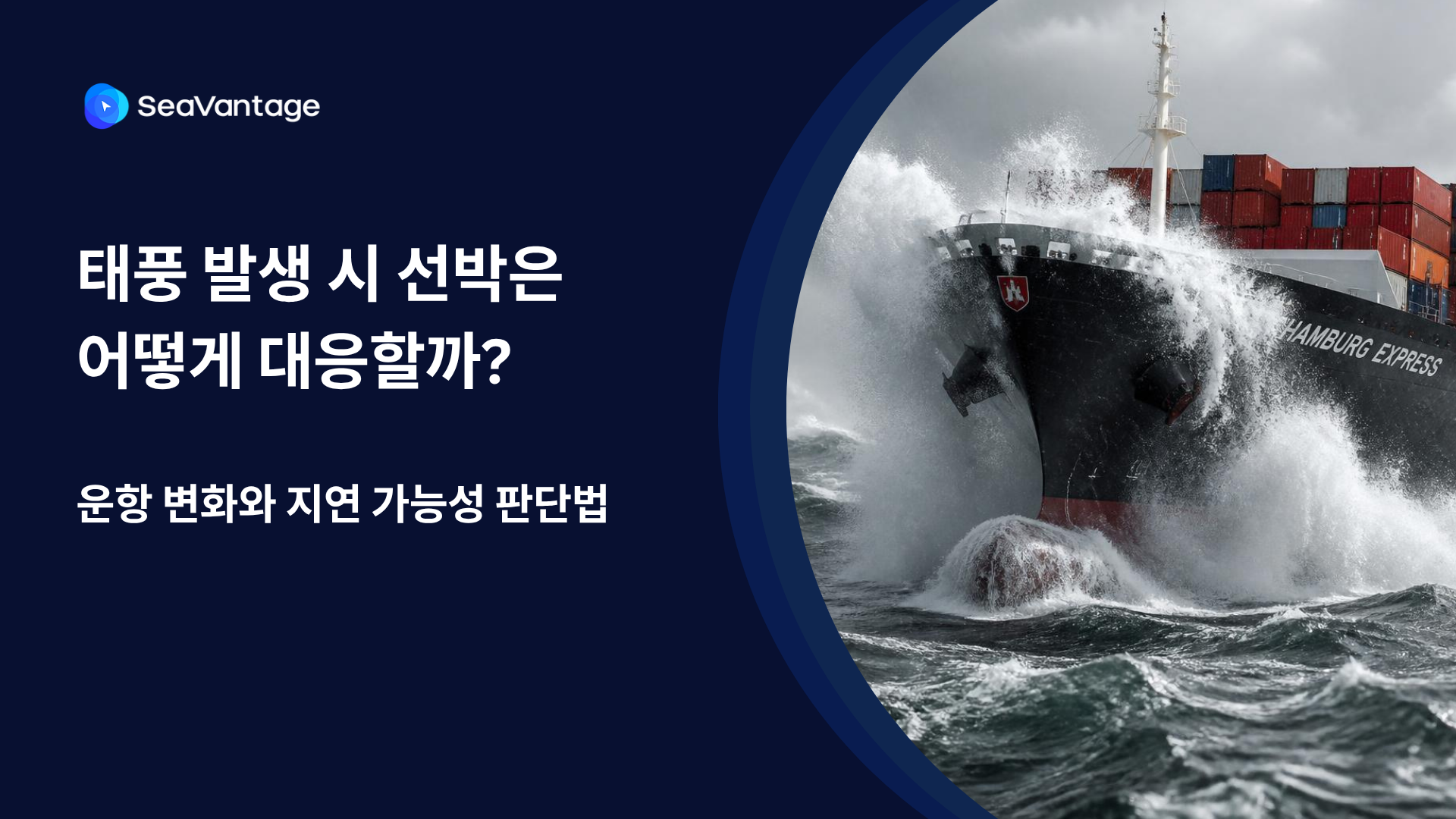
태풍 발생 시 선박은 우회·감속·대기 등 서로 다르게 대응합니다. AIS 항적과 ETA·PTA·PTB, 항만 혼잡 데이터를 활용해 해상운송 지연 가능성을 판단하는 방법을 알아보세요.

Durban's queue hit 15 days and Maersk's peak season surcharge quadrupled to $1,000 per 20ft on Nov 9. What it costs, and how tracking helps.

CMA CGM's November 2026 surcharges: $100/container from Beira, $300 overweight, $300/TEU to Réunion. How tracking helps shippers plan around them.
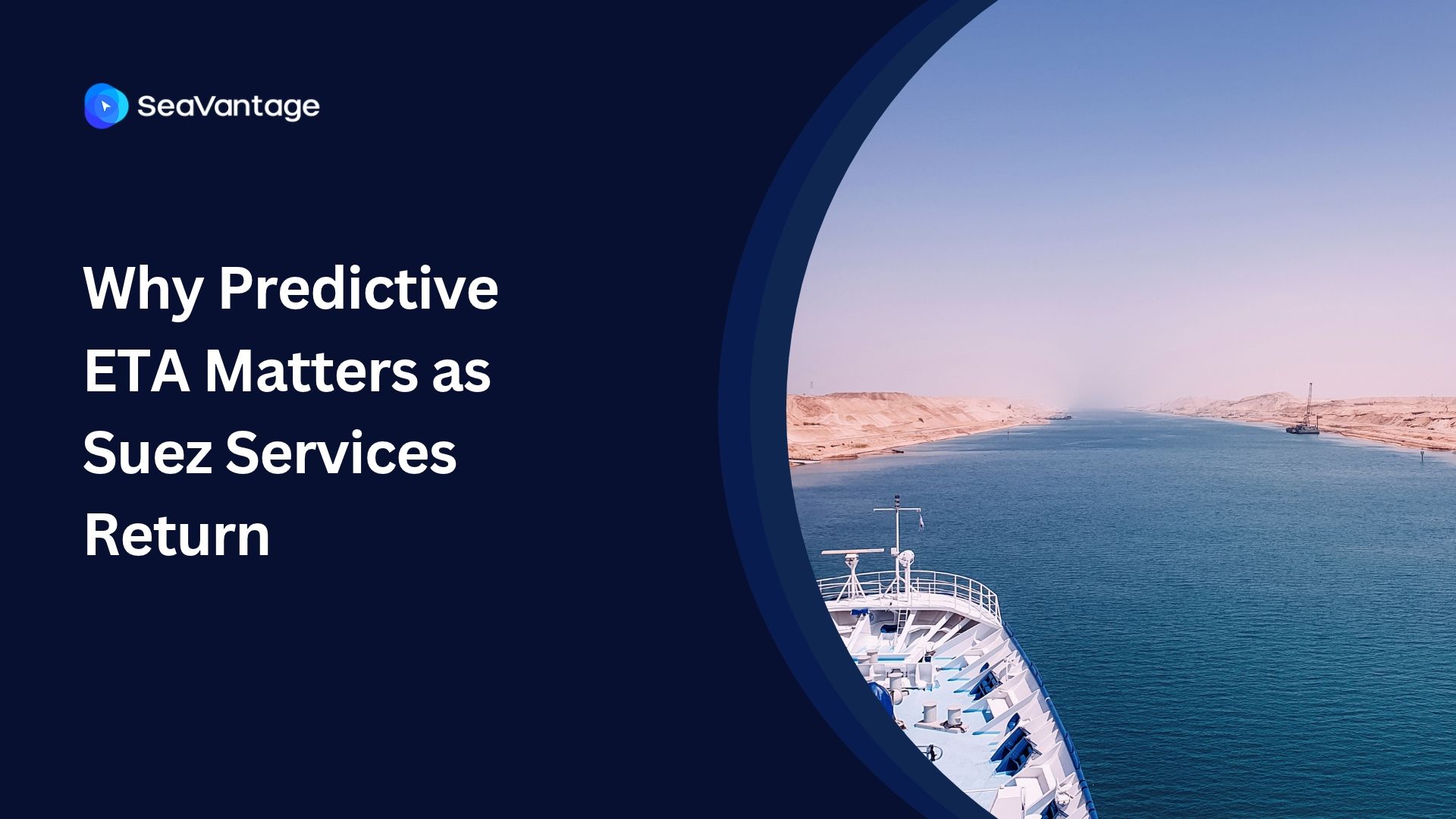
Suez routings are returning, but faster voyages can create arrival bunching. Learn how predictive ETA and port congestion data improve European import planning.


