


CMA CGM Surcharges November 2026: Three New Charges — and How Tracking Cuts the Bill

CMA CGM will charge three new surcharges in November 2026. A $100-per-container port congestion surcharge on shipments out of Beira, Mozambique. A $300 overweight surcharge on heavy 20-foot boxes from China to the Indian Ocean. And a $300-per-TEU peak season surcharge on Far East cargo to Réunion. You cannot negotiate these charges away. You can plan around them. Tracking shows where your boxes are, when they will arrive, and which ports are congested — before the charges land.
The three surcharges at a glance
Bunker surcharges, terminal handling charges, and local fees continue on top. The new charges stack. They do not replace anything.
What each surcharge hits
Beira: the Port Congestion Surcharge
CMA CGM blames congestion at the Port of Beira. The charge is $100 per container, on every destination. It starts 15 November for most cargo. Countries with filing requirements follow on 30 November. Space is not guaranteed — the carrier says shipments remain subject to availability.
Congestion surcharges punish the uninformed. If you book into Beira blind, you pay the $100 and you wait in the queue. If you see the congestion first, you can ask a different question: does this box need Beira at all?
China to the Indian Ocean: the Overweight Surcharge
This one is already live. Since 1 November, a 20-foot dry container over 18 tonnes gross weight costs $300 extra on selected China–Indian Ocean sailings. It runs until further notice. Port Louis, Mauritius, is excluded — but only because the existing $500-per-container surcharge still applies there.
Weight is a planning failure, not bad luck. The threshold is public. The box weight is known before loading. A $300 charge on a box that could have been split, re-stuffed, or shifted to a 40-foot unit is a charge you chose to pay.
Far East to Réunion: the Peak Season Surcharge
From 15 November, every TEU from the Far East to Pointe des Galets costs $300 more. All cargo types. For China-origin cargo, the charge depends on Shanghai Shipping Exchange filing rules — or CMA CGM may fold it into the ocean freight rate instead.
Do the math on your own volume. Ten 40-foot boxes equal 20 TEU. At $300 per TEU, that is $6,000 in PSS alone. The charge lands on 15 November. Cargo already moving before that date may escape it. Confirm the trigger date with the carrier — the announcement does not spell out whether sailing date, bill-of-lading date, or booking date controls.
Four ways tracking cuts the bill
1. Ship before the window closes
Two of the three surcharges start 15 November. That leaves days, not months. Cargo Insight tracks containers by bill of lading, booking, or container number, with milestone updates at every leg. Check what is already on the water. Check what can still load before the 15th. Then confirm the surcharge trigger with the carrier before you commit.
2. Route around the congested port
Port Insight shows congestion, schedules, waiting times, and port-call records. Look at Beira before you book Beira. Compare the queue there with the next workable port. A longer inland leg can cost less than $100 a box plus days of dwell.
This also answers the space question. The carrier warns that Beira shipments depend on availability. A congested port and tight space mean rolled cargo. Rolled cargo means a second booking — and a second exposure to the surcharge.
3. Catch the overweight box before it sails
The OWS threshold is 18 tonnes gross on a 20-foot dry box. That number is fixed. Check weights at stuffing, not at the terminal gate. If a box crosses the line, split the load or move it to a 40-foot unit. One check at origin saves $300 per box. Ten heavy boxes save $3,000.
4. Stop delay costs from stacking
A surcharge is one line on the invoice. Delay adds more: demurrage, detention, missed truck appointments, rush fees. Congestion at Beira and peak-season pressure at Pointe des Galets both push dwell time up.
Cargo Insight tracks carrier ETA and SeaVantage PTA independently at every leg of the voyage. The PTA is a continuously recalculated estimate built from live vessel movement and operating conditions. It is not a replacement for the carrier's official ETA. It is a complementary signal. When the PTA moves later than the ETA, treat it as an early warning: pre-check trucking, hold warehouse flexibility, draft the customer note. Do not wait for the official update to catch up.
The same logic applies at the terminal. Cargo Report inside Cargo Insight shows dwell across active shipments in 0–4, 5+, 10+, and 15+ day brackets, with ATA versus Gate Out and free-time comparison in one view. A box in the 10+ bracket gets attention before free time expires. A box found at invoice time is already a charge. See also: how to avoid demurrage charges in 2026.
One dashboard, three views
Surcharges hit at three points: the box, the vessel, and the port. SeaVantage tracks all three in one platform.
- Cargo Insight follows the container. Track by bill of lading, booking, or container number across 42 supported carriers. Milestone updates show where the box is. PTA and ETA run side by side at every leg, including transshipment calls — where delays hide and cascade.
- Ship Insight follows the vessel. Track by name, IMO, or MMSI. Live AIS position, ETA, and port calls show whether the ship carrying your cargo is on schedule, slowing down, or queuing at anchorage.
- Port Insight follows the port. Congestion levels, schedules, waiting times, and port-call records show whether the destination can absorb the vessel when it arrives. Arrival is not availability. A ship that berths late still triggers dwell.
Use them together. A late PTA on the box, a slow vessel on the map, and a congested port at destination all point the same way. Act on the first signal, not the last.
A short checklist before you book
- Check the dates. OWS is live since 1 November. PCS and PSS start 15 November. Filing-requirement countries follow on 30 November for Beira.
- Check the weights. Any 20-foot dry box over 18 tonnes gross from China to the Indian Ocean costs $300. Port Louis already costs $500.
- Check the port. Look at Beira congestion in Port Insight before you route through it.
- Check the vessel. Confirm the actual operating vessel and its live position in Ship Insight — not just the service name on the booking.
- Check the PTA against the ETA. If the predicted arrival drifts later than the official ETA, pre-check trucking and warehousing now. Do not wait for the carrier update.
Frequently asked questions
What are CMA CGM's three new surcharges for November 2026?
A $100-per-container Port Congestion Surcharge on shipments from Beira, Mozambique; a $300 Overweight Surcharge on heavy 20-foot containers from China to Indian Ocean destinations; and a $300-per-TEU Peak Season Surcharge on Far East cargo to Pointe des Galets, Réunion.
When do the CMA CGM November 2026 surcharges take effect?
The Overweight Surcharge started 1 November 2026 and runs until further notice. The Port Congestion Surcharge and the Peak Season Surcharge start 15 November 2026. For Beira, countries subject to filing requirements follow on 30 November 2026.
Does the Beira port congestion surcharge apply to all cargo?
It applies to dry, hazardous, and out-of-gauge cargo from Beira to all destinations. CMA CGM cited congestion at the Port of Beira and noted that shipments remain subject to space availability.
Which containers face the $300 overweight surcharge?
20-foot dry containers with a gross weight exceeding 18 tonnes, on selected shipments from China to Indian Ocean destinations. Port Louis, Mauritius, is excluded — the existing $500-per-container surcharge continues to apply there.
Can tracking help me avoid CMA CGM surcharges?
Tracking cannot remove a surcharge the carrier has announced. It can cut your exposure: ship before the effective date, route around a congested port, catch overweight boxes before loading, and act on delay signals early enough to avoid demurrage, detention, and rush fees on top of the surcharge.
How does SeaVantage PTA differ from carrier ETA?
Carrier ETA is the carrier's official expected arrival — the baseline for planning. PTA is SeaVantage's continuously recalculated prediction, built from live vessel movement and operating conditions. PTA works alongside ETA as an earlier delay-risk signal. It does not replace the official ETA.
Related reading
- Ocean Freight Peak Season 2026: A Readiness Playbook
- Mass Vessel Rerouting Is Triggering Global Port Congestion — Here's What It Means for Container Visibility
- CMA CGM Tracking in 2025: Everything You Need to Know
The takeaway
Surcharges are a pricing fact. The cost around them is a visibility problem. A $100 congestion charge, a $300 overweight charge, and a $300-per-TEU peak charge all land in the same month. The shippers who pay least will be the ones who saw them coming: boxes tracked leg by leg, vessels watched live, ports checked before booking.
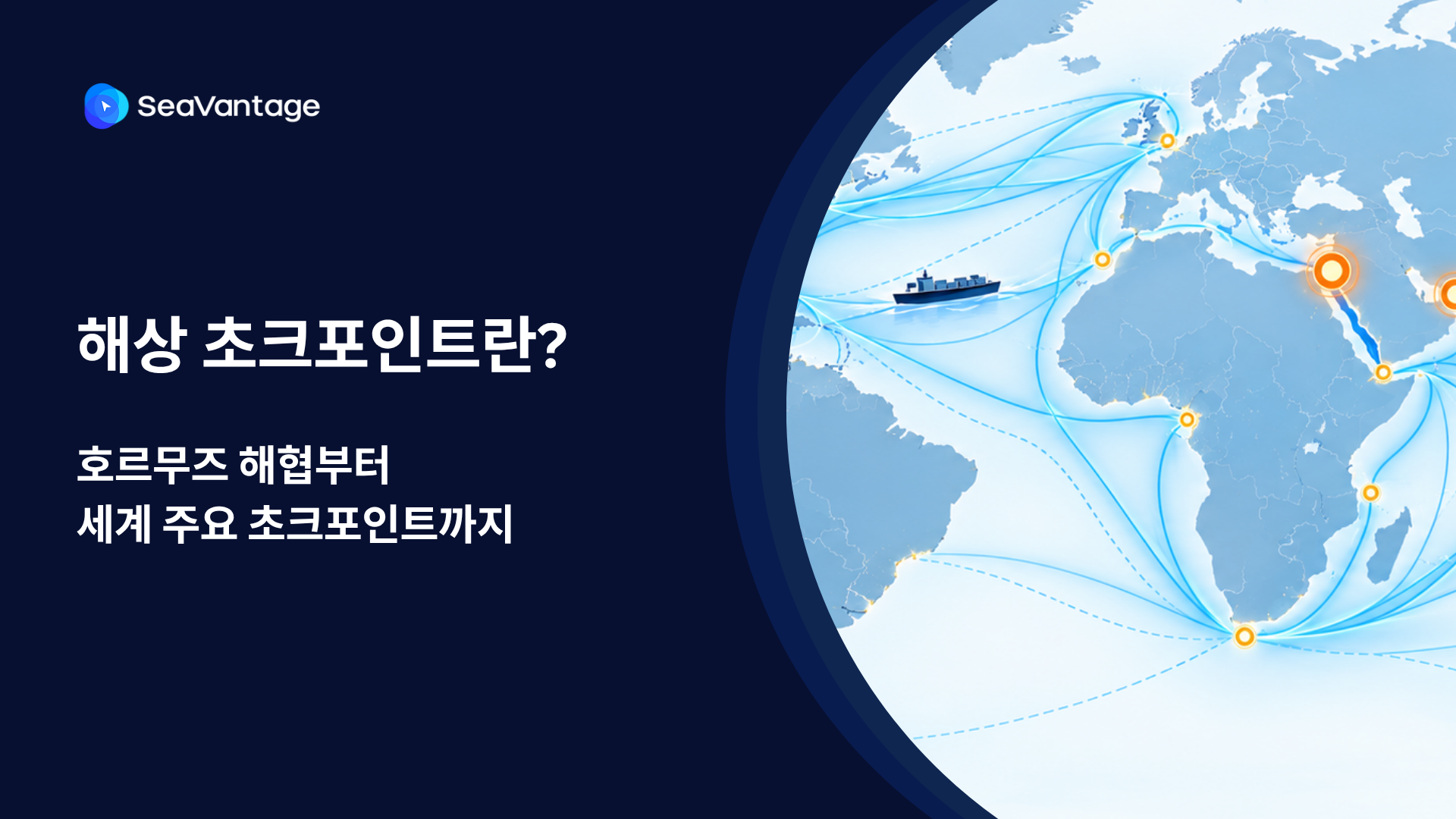

팬스타 아크로호가 지난 8월 22일 북극항로 시범운항을 시작했습니다. 국내 최초 컨테이너선 북극항로 운항 현황과 상업성 검증 항목, 화주·포워더가 주목할 사항을 정리합니다.
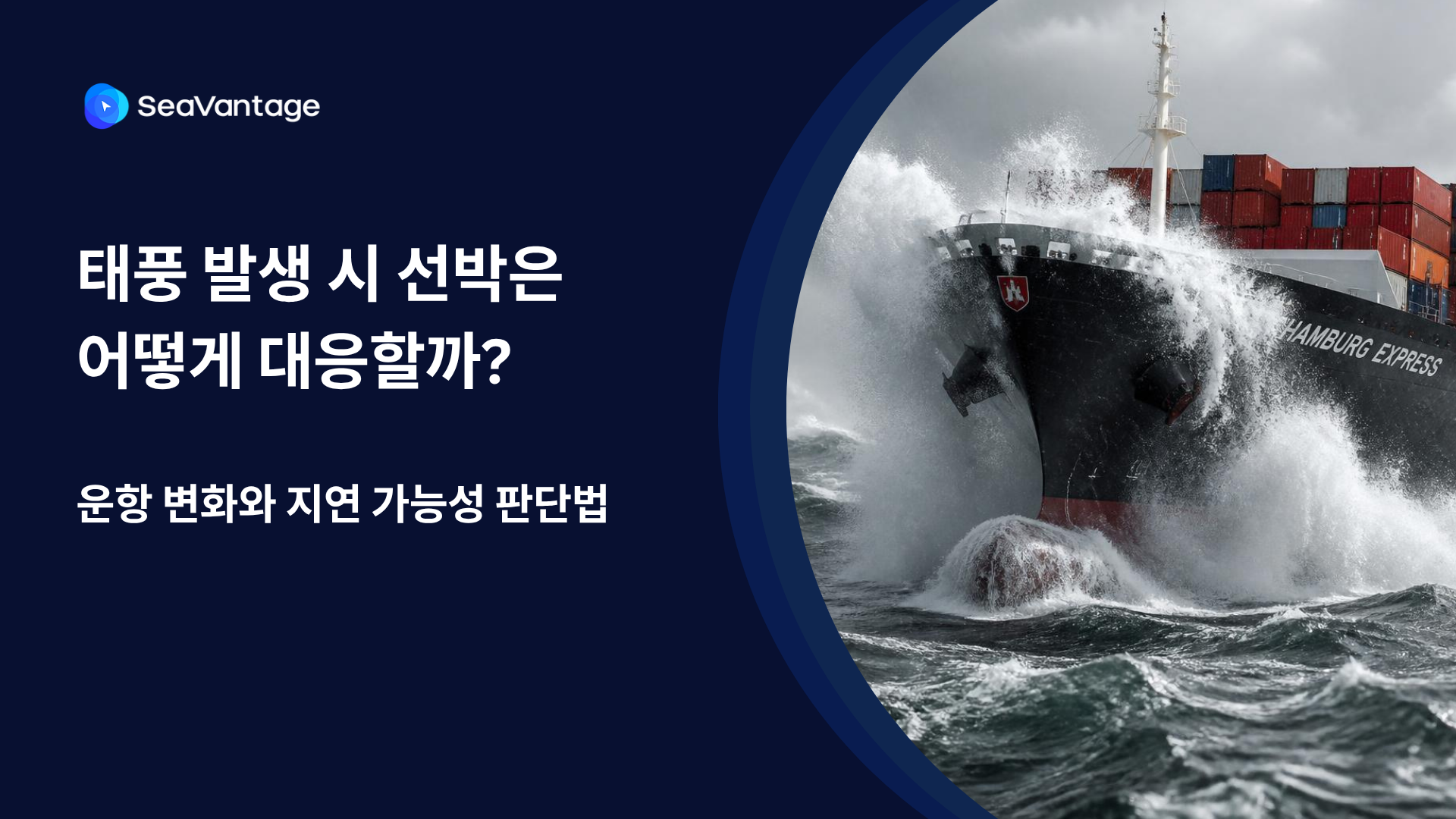
태풍 발생 시 선박은 우회·감속·대기 등 서로 다르게 대응합니다. AIS 항적과 ETA·PTA·PTB, 항만 혼잡 데이터를 활용해 해상운송 지연 가능성을 판단하는 방법을 알아보세요.

CMA CGM's November 2026 surcharges: $100/container from Beira, $300 overweight, $300/TEU to Réunion. How tracking helps shippers plan around them.
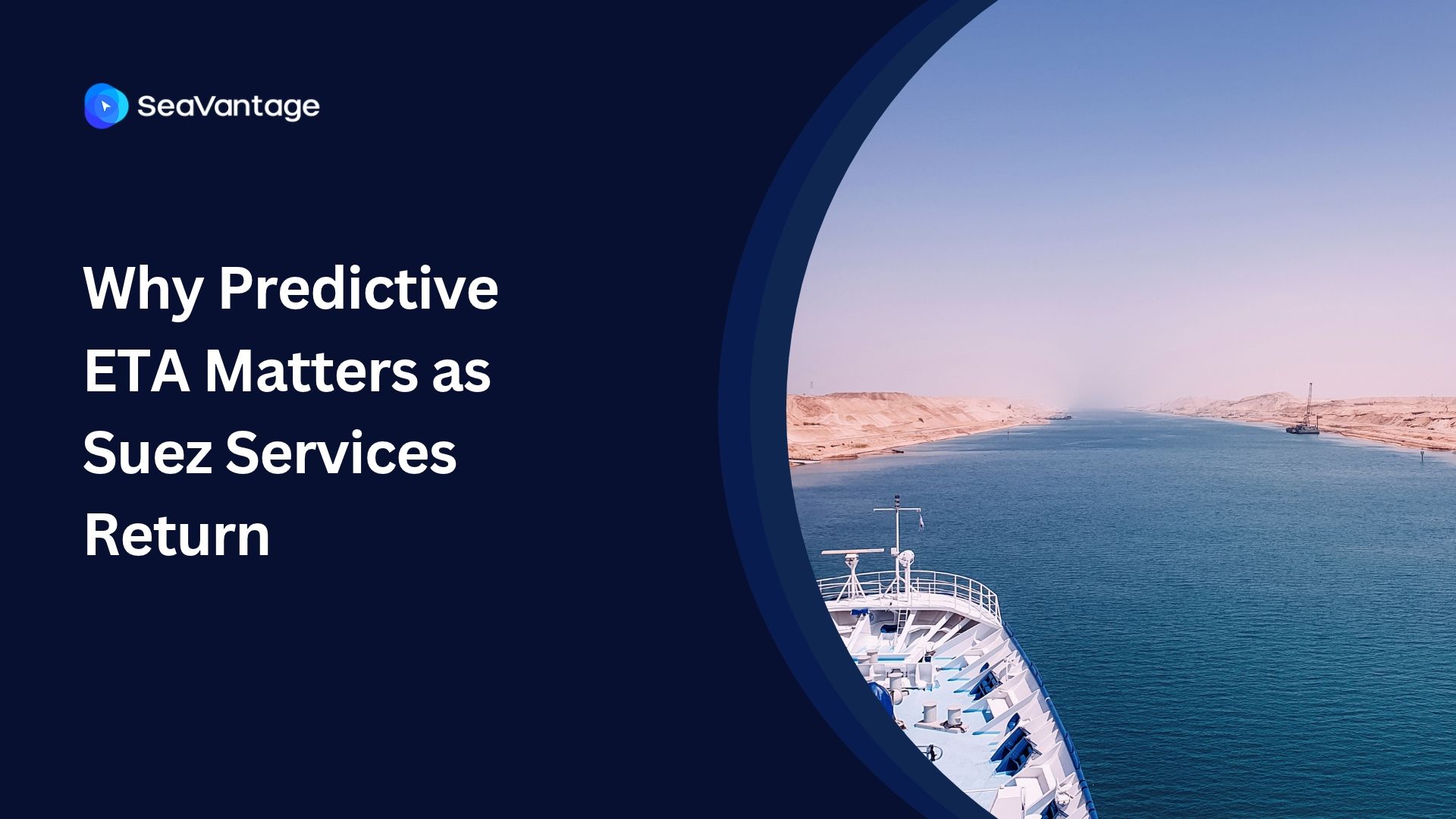
Suez routings are returning, but faster voyages can create arrival bunching. Learn how predictive ETA and port congestion data improve European import planning.

Suez traffic is returning while Hormuz and Red Sea risks remain elevated. See what changing vessel routes mean for capacity, rates and ocean freight planning.


