


How to Avoid Demurrage Charges in 2026: A Container Dwell Playbook

TL;DR — The Short Version
• Demurrage charges in 2026 are routinely the third-largest line item on an ocean P&L after freight and fuel surcharges — and the majority of them are avoidable.
• The reason teams keep paying is structural: most demurrage shows up at the bill stage, when the cost is already locked in. By the time finance asks "why?", the answer is" because nobody saw the dwell clock running."
• The fix is treating demurrage as a visibility problem, not a finance problem. Real-time dwell tracking, free-time benchmarking, and dwell-bracket prioritization (0–4, 5+,10+, 15+ days) move the decision left — from invoice-time to action-time.
• SeaVantage's new Cargo Report inside Cargo Insight is purpose-built for this: one view of dwell acrossall active shipments, side-by-side ATA vs. Gate Out, free-time comparison,dwell brackets for triage, port-level delay analytics, and custom exports.
Every container moved out of the 10+ day bracket before free time expires is pure margin recovery.
Demurrage Isn't a Finance Problem. It's a Visibility Problem.
Ask any ocean shipper or forwarder how they manage demurrage today, and you'll hear some version of the same answer: a spreadsheet, a couple of free-time deadlines someone tracks manually, and a finance team that flags charges at the invoice review. The result is predictable. Demurrage charges hit the P&L weeks after they were preventable. Finance asks ops "why?" Ops shrugs and says "we didn't know."
That's not an ops failure. It's a visibility failure.
The teams quietly winning on demurrage in 2026 aren't the ones with better lawyers or tougher contract terms. They're the ones who've moved the decision left — from the invoice stage to the dwell stage. They see the clock running before it becomes a charge, they triage on dwell brackets daily, and they pull the right container out of the yard before free time expires. The cost they avoid never appears on the P&L in the first place.
See also Understanding Demurrage vs. Detention: Differences and the Role of Shipment Visibility
What Demurrage Actually Costs in 2026 — And Why It's Mostly Avoidable
Container demurrage rates have risen sharply over the past three years, particularly in the U.S. and at high-throughput Asian and European gateways. Daily charges in the $150–$300+ per container per day range are now standard at major ports, with steep escalation tiers kicking in after the first three to five days of overstay.
The avoidable portion is the part that hurts. Industry surveys repeatedly find that the majority of demurrage charges trace back to causes shippers had the ability to prevent — drayage capacity, trucker booking lag, document errors, or simple lack of awareness that a container was about to clock through its free time. Port congestion accelerates the problem: when terminals run multi-day vessel waits, dwell times stretch and free-time windows compress (see our May 2026 ocean freight market update for the current congestion picture at Qingdao, Hamburg, and Savannah).
The implication is uncomfortable for any team still managing dwell in a spreadsheet: the demurrage you're paying is mostly demurrage you could have prevented if you'd seen the clock running.
The Dwell-Bracket Operating Model
The teams that win on demurrage operate by dwell bracket, not by container. The bracket tells you the urgency; the container is just where you take action.
This is exactly the bracketed view SeaVantage's new Cargo Report module surfaces by default — dwell time across every active shipment, segmented by 0–4 / 5+ / 10+ / 15+ day brackets, with port and terminal context attached. The result is that your ops team starts every morning with a triage list, not a search problem.
The Three Data Points That Drive Demurrage Decisions
Every demurrage decision comes down to comparing three numbers. If your visibility platform doesn't expose all three side-by-side, you're guessing.
1. ATA (Actual Time of Arrival) at port
The clock starts here. Without an accurate, real-time ATA— not a stale carrier-published estimate — your dwell calculation is wrong from the first hour.
2. Gate Out
When the container physically leaves the terminal. The dwell window is ATA → Gate Out. Most teams know one or the other; the best platforms surface both in the same row.
3. Free Time Allowance
The contractual window the carrier or terminal gives you before demurrage applies. This varies by carrier, lane, and contract — and theplatforms that win on demurrage let you input or import these allowances per shipment so the comparison is automatic, not manual.
When ATA, Gate Out (or current dwell if not yet out), and free time live in one view, demurrage stops being a surprise. That's the operating mode Cargo Report is built for.
Five Workflow Shifts That Compound Quickly
The teams that have moved demurrage from a quarterlyreview item to a daily ops metric tend to make five specific changes:
• Daily standup, dwell-bracket first. Every morning, ops reviews the 10+ and 15+ day brackets before anything else. Highest-cost containers get attention first.
• Drayage SLA tied to dwell. Drayage partners are graded on how quickly they execute against containers in the 5+ bracket, not on average turn time. This shifts the right incentive to the right partner.
• • Free-time visibility for the customer. Customers who are causing demurrage by holding their own documentation or appointments rarely know. A shared dwell view — see our guide to shareable shipment tracking links — closes the loop without giving them platform access.
• Port-level pattern analysis. Recurring delays at a specific terminal are a procurement signal, not just an ops one. Knowing that 30% of your demurrage traces to one terminal can change your booking strategy entirely.
• Custom exports for finance and procurement. Demurrage spend by port, by carrier, and by customer turns into negotiating leverage at the next contract round. Cargo Report's custom-column export is built for exactly this hand-off.
What "Real-Time Demurrage Monitoring" Should Look Like inPractice
Most platforms market real-time demurrage tracking. The bar for what that actually means in 2026 should be specific:
This is exactly the spec Cargo Report is built against. For a broader view of how visibility platforms compare on these capabilities, see our container tracking software comparison for 2026.
The Math: What Catching Demurrage Early Is Actually Worth
Take a forwarder or BCO moving 8,000 containers a year. Industry-typical demurrage incidence rates suggest 6–10% of containers incur some demurrage exposure — call it 600 containers. Average paid demurrage per affected container in current markets runs $400–$800 once escalation tiers kick in.
• 600 affected containers ×$600 average paid = approximately $360,000 in annual demurrage spend.
• Industry experience suggests 40–60% of that is avoidable with real-time dwell visibility and bracketed triage.
• That's $144K–$216K per year of recovered margin — for a single mid-sized operation.
Now scale to enterprise BCO volume, and the avoidable portion frequently crosses seven figures. Demurrage stops being a line item and starts being a P&L lever.
Frequently Asked Questions
What is container demurrage and how is it calculated?
Demurrage is a per-day charge levied by carriers or terminals when a container remains at port beyond its free time allowance. It's calculated from ATA (Actual Time of Arrival) to Gate Out, with daily rates that typically escalate after the first three to five days of overstay. In 2026, base daily rates of $150–$300+ per container per day are standard at major ports.
How can I reduce demurrage charges in 2026?
The single most impactful change is moving demurrage management from a finance-stage workflow (reviewing invoices after the fact) to an ops-stage workflow (acting on dwell brackets before free time expires). The operating pattern: real-time dwell tracking, dwell-bracket triage (0–4 / 5+ /10+ / 15+ days), free-time benchmarking, and daily review of the 10+ bracket. Platforms like SeaVantage Cargo Report are purpose-built for this.
What's the difference between demurrage and detention?
Demurrage covers charges that accrue while the container is still at the port or terminal beyond free time. Detention covers charges that accrue once the container has left the terminal but isn't returned empty within the carrier's allowed window. Both are dwell-driven, both are largely avoidable with real-time visibility, and both should be monitored on the same dashboard.
Why is dwell time at port important for ocean shippers?
Dwell time at port is the single most important leading indicator of demurrage risk. Once a container crosses its free-time threshold, every additional day translates directly into a charge. Real-time dwell visibility — particularly at the bracketed level (0–4, 5+, 10+, 15+ days) —lets ops teams intervene before charges accrue rather than explain them afterward.
Can demurrage tracking be automated?
Yes — and in 2026 it should be. Modern visibility platforms can ingest ATA and Gate Out signals from terminals and carriers automatically, compare them against free-time allowances per shipment, and surface containers approaching or exceeding their dwell threshold. SeaVantage Cargo Report inside Cargo Insight delivers exactly this, with dwell brackets, port-level analytics, and exportable reports.
How does port-level delay analysis help reduce demurrage?
Demurrage rarely distributes evenly across ports. A small number of terminals typically drive a disproportionate share of dwell exposure. Identifying those patterns — Cargo Report surfaces delay analysis by port and terminal — turns demurrage data into procurement and routing leverage at the next contract cycle.
Move the Decision Left — From Invoice to Action
Every dollar of avoidable demurrage you pay in 2026 is a visibility gap, not a market condition. The teams that recover that margin aren't running smarter spreadsheets — they're running real-time dwell, bracketed triage, and port-level analytics in one view.
Take control of your demurrage with Cargo Report in SeaVantage Cargo Insight. Live now for all active free-trial and paid users: insight.seavantage.com/cargo-report
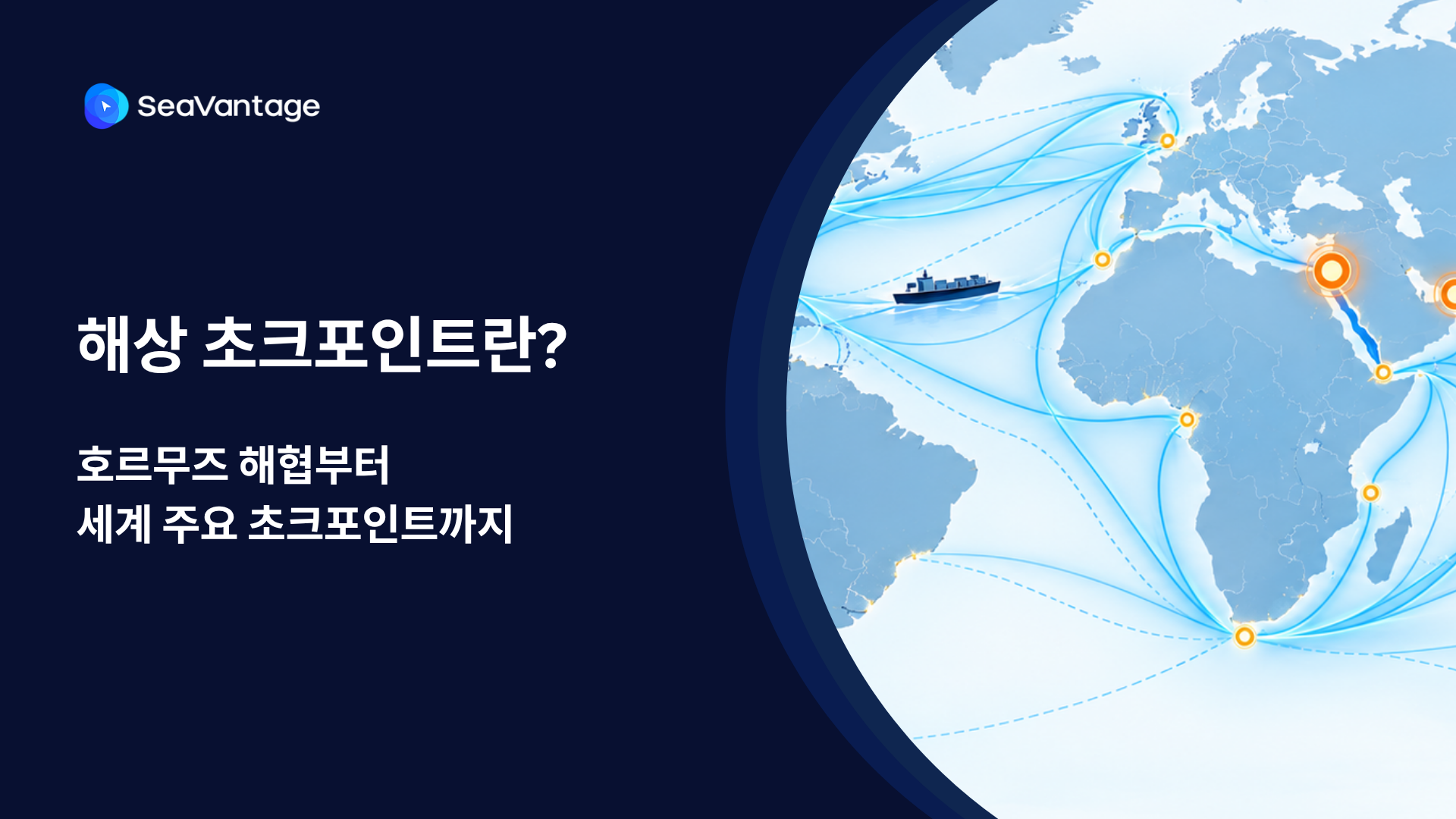

팬스타 아크로호가 지난 8월 22일 북극항로 시범운항을 시작했습니다. 국내 최초 컨테이너선 북극항로 운항 현황과 상업성 검증 항목, 화주·포워더가 주목할 사항을 정리합니다.
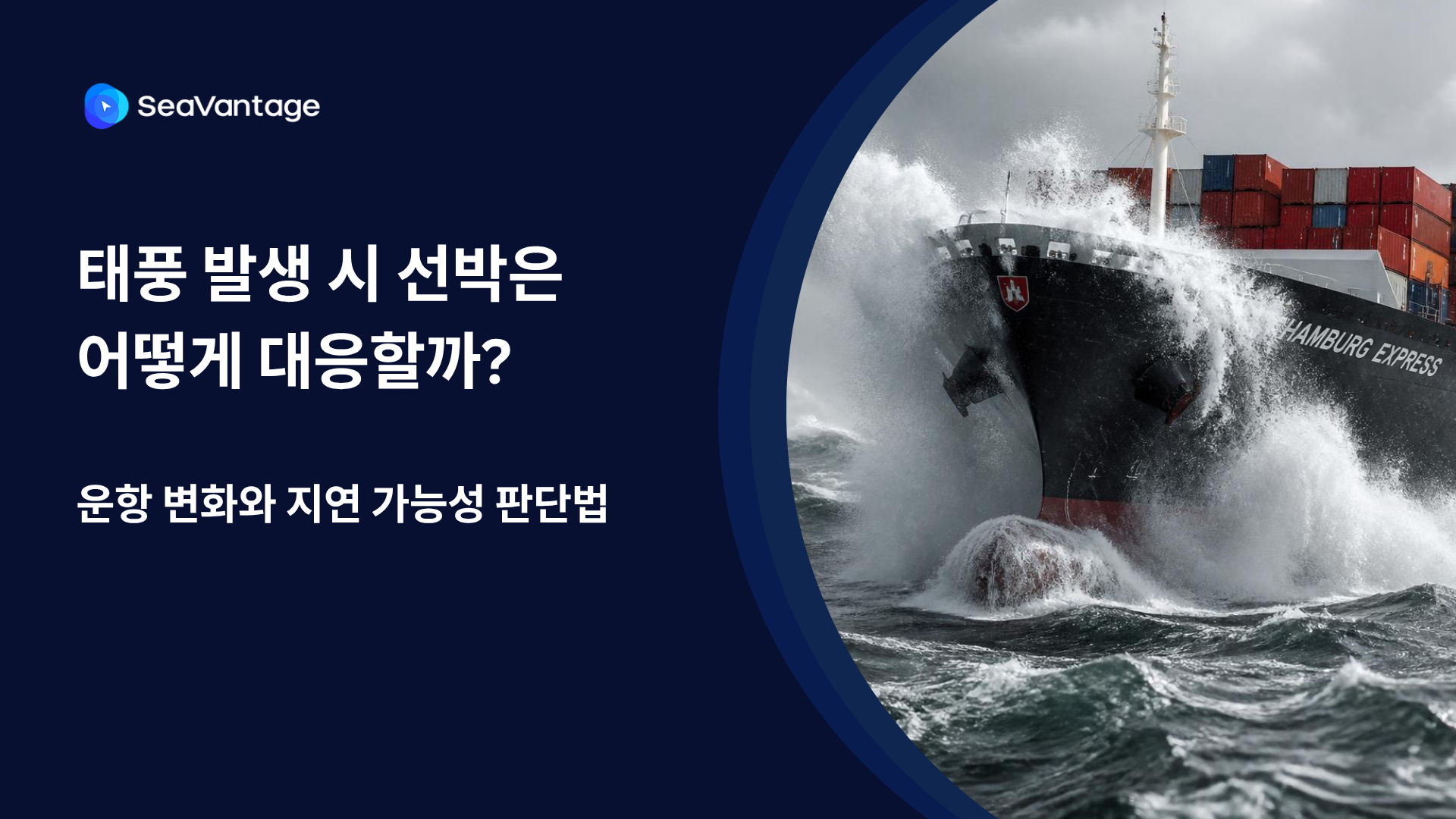
태풍 발생 시 선박은 우회·감속·대기 등 서로 다르게 대응합니다. AIS 항적과 ETA·PTA·PTB, 항만 혼잡 데이터를 활용해 해상운송 지연 가능성을 판단하는 방법을 알아보세요.
Need a SeaRates alternative? See how SeaVantage Cargo Insight supports container tracking, predicted arrivals, shipment milestones, and API access.
TPEB rates 2026, Indian Subcontinent ocean freight capacity, Strait of Hormuz shipping disruption, schedule reliability ocean carriers
What's driving ocean freight peak season 2026 — rates, surcharges, booking windows, and how to avoid missed inventory deadlines.

.png)


