


Why Consulting Firms Are Adding Maritime Visibility to Client Engagements
TL;DR
- Consulting and systems integration firms running supply chain digital transformation engagements increasingly need to deliver more than a roadmap — clients now expect real-time, predictive visibility built into the outcome.
- Ocean freight is the weakest link in most visibility stacks: carrier-provided ETAs are frequently inaccurate, and few enterprise systems account for the gap.
- Firms generally have three options — build tracking in-house, buy a generic module, or partner with a specialized visibility provider — and partnering is increasingly the default for firms that don't want visibility infrastructure to become a permanent maintenance burden.
- The right maritime visibility partner should be API-first, carry enterprise-grade SLAs, deploy quickly inside an existing engagement timeline, and stay out of the way of the firm's own advisory relationship with the client.
- SeaVantage works with consulting and SI firms to add container- and vessel-level visibility to client engagements without the firm having to build or maintain the technology itself. Talk to our Partnerships team →
Supply Chain Visibility Is Becoming a Consulting Deliverable, Not Just a Recommendation
For years, a supply chain digital transformation engagement ended with a roadmap: a set of recommended systems, a target operating model, maybe a vendor shortlist. The client's own team was left to go implement it.
That's changing. Enterprise clients running global operations — retailers, manufacturers, 3PLs, and the shippers who depend on them — are asking consulting and systems integration firms to show up with working visibility, not just a plan for it. A transformation engagement that ends in a slide deck instead of a live dashboard increasingly reads as incomplete.
That shift puts firms in a position they haven't always been in: choosing, integrating, and standing behind a piece of technology as part of the deliverable. And for global operations, the piece of that stack that's hardest to get right — and most visibly broken when it's wrong — is ocean freight.
Why Maritime and Ocean Freight Visibility Specifically Matters Right Now
Disruption Has Become the Baseline, Not the Exception
Route disruptions in the Red Sea, congestion around the Suez Canal, and recurring tension around the Strait of Hormuz have each, in turn, forced global shippers to reroute vessels, absorb longer transit times, and re-plan inventory on short notice. None of these were isolated events — they're the current operating environment for anyone moving freight by sea.
For a consulting firm advising a client on supply chain resilience, that's no longer a hypothetical risk to plan around. It's a live variable that needs a live data feed.
The ETA Problem Nobody Budgets For
Most enterprise systems still treat a carrier's Estimated Time of Arrival as a fact rather than what it actually is: a static, carrier-reported guess that's frequently wrong and rarely updated in real time.
The more useful number is a Predicted Time of Arrival (PTA) — a continuously updated prediction built from live AIS vessel data, port and terminal conditions, and historical routing patterns, benchmarked against the carrier's Actual Time of Arrival (ATA) once the vessel actually arrives. The gap between what a carrier says (ETA) and what actually happens (ATA) is where cost, risk, and client dissatisfaction quietly accumulate — demurrage charges, missed production windows, blown SLAs. A PTA model is built specifically to close that gap before it becomes a client's problem.
For a firm recommending a technology stack, this distinction matters more than it looks. A client asking "can you see where our containers are" is really asking "can you tell me, accurately, when they'll arrive" — and most existing systems can't.
Clients Now Expect Real-Time Data as Part of the Engagement, Not an Add-On
Digital transformation clients increasingly measure success in dashboards, not documents. A visibility layer that shows live vessel positions, predicted arrival times, and port congestion in one place has become table stakes for a "we modernized our supply chain" outcome — which means it has become table stakes for the firms delivering that outcome.
What This Means for Consulting and Systems Integration Firms
Build, Buy, or Partner?
Firms facing this gap generally land on one of three paths:
- Build it in-house — technically possible, but maritime data (AIS feeds, port and terminal polygons, carrier schedule data) is its own specialized domain, and maintaining it becomes a permanent cost center rather than a one-time project.
- Buy a generic module — many TMS and ERP platforms bolt on basic tracking, but it's rarely predictive, rarely ocean-freight-specific, and rarely built to be embedded into someone else's client-facing deliverable.
- Partner with a specialized visibility provider — API-first, already built, already maintained, and designed to plug into an existing engagement timeline rather than extend it.
We'll go deeper on this decision in the next post in this series — but for most firms, the calculus increasingly favors partnering: it turns a build-and-maintain problem into a configure-and-deploy one.
Read more: Build vs. Buy vs. Partner: How System Integrators Solve Container Visibility for Enterprise Clients
What Changes in Vendor Selection Criteria
When the "buyer" is a consulting firm selecting on behalf of a client rather than an end user selecting for themselves, the evaluation criteria shift:
- API-first, not dashboard-first — the ability to embed data into the client's existing systems matters more than a standalone UI.
- Enterprise-grade SLAs and uptime — the technology becomes part of the firm's own delivery commitment, so its reliability reflects on the firm, not just the vendor.
- Fast, predictable deployment — a visibility layer that takes months to stand up doesn't fit inside a fixed-scope engagement timeline.
- A partner that stays in its lane — the provider should strengthen the firm's advisory relationship with the client, not compete for it.
What to Look for in a Maritime Visibility Technology Partner
At a minimum, a maritime visibility partner worth recommending to a client should offer:
- Real-time, multi-source vessel tracking (not carrier-reported data alone)
- A predictive ETA model (PTA) benchmarked against actual outcomes, not just a static schedule feed
- A documented, developer-ready API — not just a web dashboard
- Enterprise SLA and uptime commitments you can stand behind in a client conversation
- The ability to deploy inside a normal engagement timeline, not a multi-quarter integration project
We'll publish a full RFP checklist later in this series for firms evaluating vendors formally — but the five criteria above cover the majority of what separates a genuine visibility partner from a feature bolted onto a broader platform.
Frequently Asked Questions
What is maritime or ocean freight visibility?
Maritime visibility is the ability to track and predict the location and status of ocean freight shipments and vessels in real time — including live position data, predicted arrival times, and port or terminal congestion — rather than relying solely on static, carrier-reported schedules.
Why are consulting firms getting involved in supply chain visibility technology?
Because clients increasingly expect digital supply chain transformation engagements to deliver working visibility as part of the outcome, not just a strategic roadmap. Firms that can recommend or embed a reliable visibility layer are better positioned to deliver a complete, defensible engagement.
What's the difference between ETA, PTA, and ATA?
ETA (Estimated Time of Arrival) is a carrier-reported estimate that's often set early in a voyage and rarely updated. PTA (Predicted Time of Arrival) is a continuously updated, data-driven prediction based on live vessel and port data. ATA (Actual Time of Arrival) is what actually happens. The gap between ETA and ATA is where operational risk hides; a good PTA model is built to close that gap in advance.
How should a consulting or systems integration firm evaluate a maritime visibility vendor for a client engagement?
Prioritize an API-first architecture, a predictive (not just reactive) data model, documented enterprise SLAs, fast deployment timelines, and a vendor that's built to integrate into your delivery rather than compete with your advisory relationship. A full evaluation checklist is available in our RFP guide (linked once published).
Should we build maritime visibility in-house or partner with a vendor?
For most firms, partnering is the more sustainable path. Maritime tracking data — AIS feeds, port and terminal geofencing, carrier schedules — is a specialized, continuously maintained data domain. Building it in-house turns a single client deliverable into an ongoing infrastructure commitment.
The Bottom Line
Maritime visibility has moved from a "nice to have" to a genuine deliverable inside supply chain transformation work — and the firms getting ahead of it are treating vendor selection the same way they'd treat any other critical piece of a client's technology stack: deliberately, and with a partner built for exactly this use case.
SeaVantage works with consulting and systems integration firms to add container and vessel-level visibility to client engagements — API-first, enterprise-SLA-backed, and built to deploy inside your existing timeline, not extend it.
Talk to our Partnerships team →
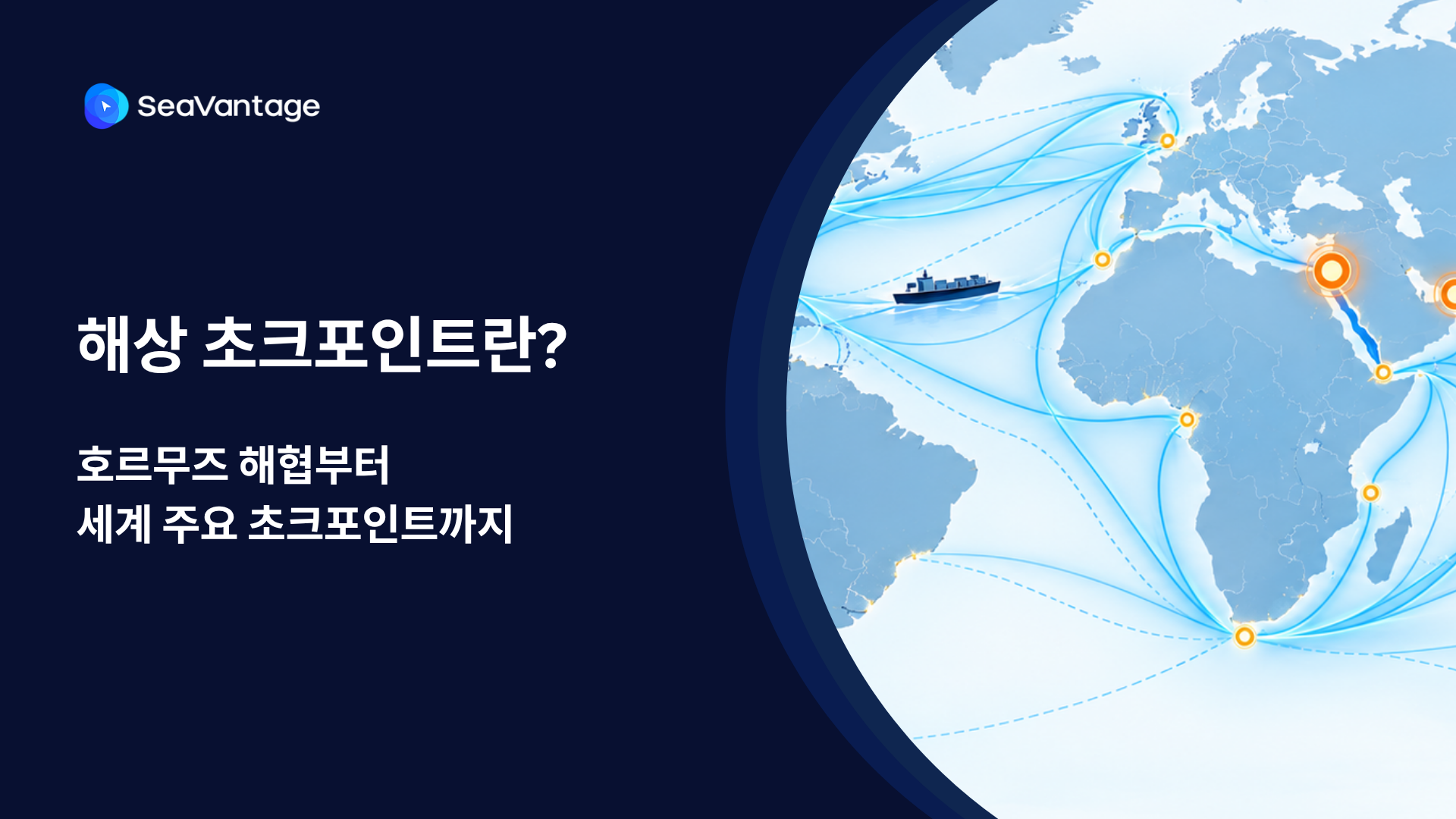

팬스타 아크로호가 지난 8월 22일 북극항로 시범운항을 시작했습니다. 국내 최초 컨테이너선 북극항로 운항 현황과 상업성 검증 항목, 화주·포워더가 주목할 사항을 정리합니다.
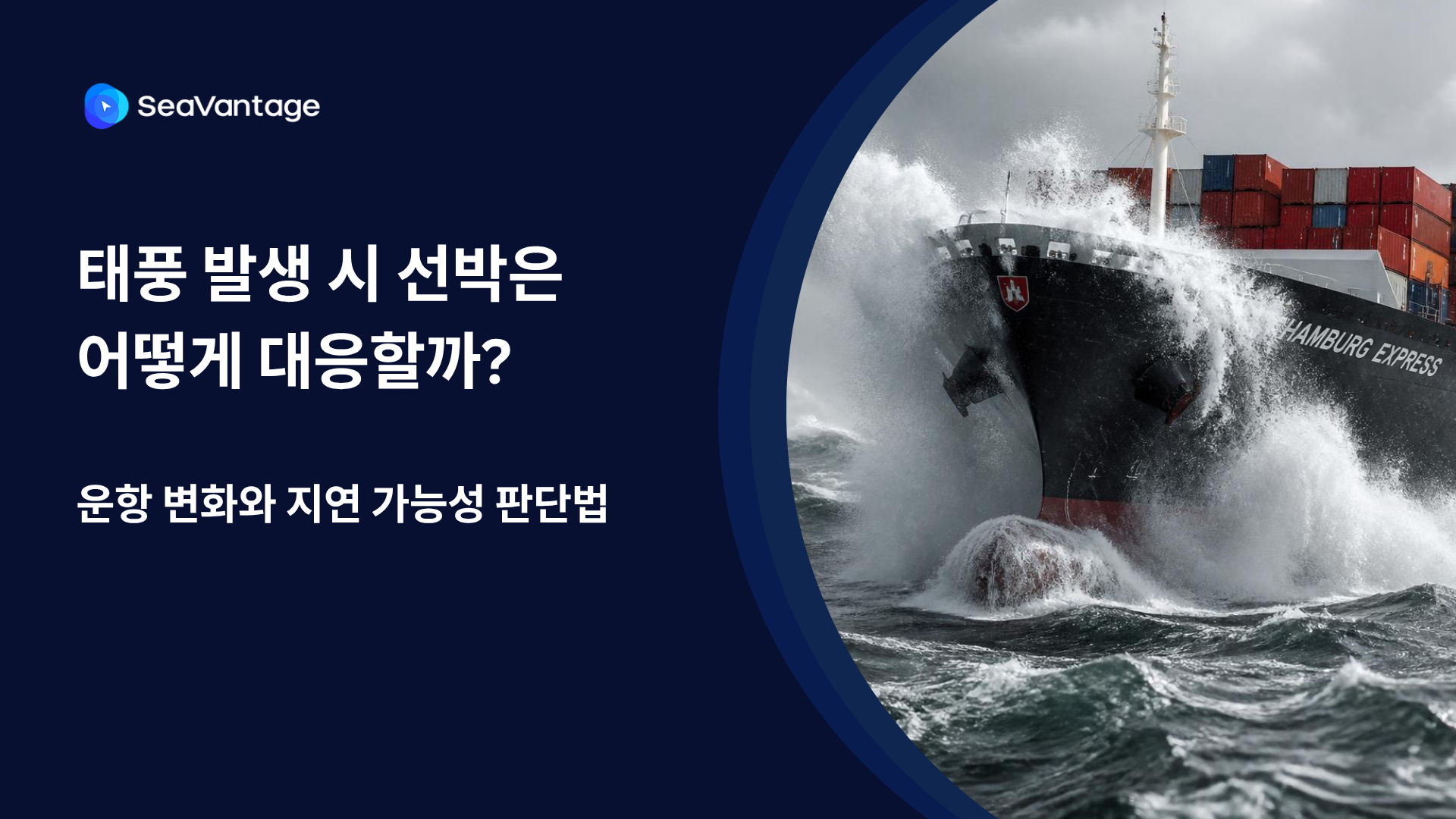
태풍 발생 시 선박은 우회·감속·대기 등 서로 다르게 대응합니다. AIS 항적과 ETA·PTA·PTB, 항만 혼잡 데이터를 활용해 해상운송 지연 가능성을 판단하는 방법을 알아보세요.
Need a SeaRates alternative? See how SeaVantage Cargo Insight supports container tracking, predicted arrivals, shipment milestones, and API access.
TPEB rates 2026, Indian Subcontinent ocean freight capacity, Strait of Hormuz shipping disruption, schedule reliability ocean carriers
What's driving ocean freight peak season 2026 — rates, surcharges, booking windows, and how to avoid missed inventory deadlines.

.png)


