


Strait of Hormuz Crisis 2026: Full Timeline & Ocean Freight Impact
.jpg)
KEY SUMMARY
- Event: Military escalation in the Middle East beginning February 28, 2026, triggering closure of the Strait of Hormuz and suspension of Suez Canal transits.
- Scope: Directly impacts 10.7% of the global container fleet by TEU capacity. Up to 470,000 TEUs of shipping capacity initially trapped in the Persian Gulf.
- Ocean Freight Rate Impact: Transpacific container rates to the U.S. West Coast up ~40% since pre-war; Asia–North Europe rates up ~20%. Emergency surcharges of up to $3,000/FEU applied across Gulf-linked corridors.
- Routing Impact: Cape of Good Hope rerouting adds 10–14 days per voyage on Asia–Europe and Asia–U.S. East Coast lanes.
- Current Status (as of April 12, 2026): Strait of Hormuz remains effectively closed following a fragile, short-lived ceasefire. Iran is limiting transits and reportedly imposing tolls exceeding $1 million per vessel. A U.S. military campaign to reopen the strait, underway since March 19, continues with no resolution confirmed.
- Analyst Outlook: Disruption expected to persist through the remainder of 2026.
Why the Strait of Hormuz Is the World's Most Critical Shipping Chokepoint
Before examining the crisis timeline, it is worth understanding what is at stake. The Strait of Hormuz is a 21-mile-wide passage connecting the Persian Gulf to the Arabian Sea and Indian Ocean. In normal times, it is the single most important maritime corridor on the planet for energy and container trade.
By the Numbers
- ~20% of global petroleum liquids pass through the strait daily (approximately 20 million barrels per day)
- ~80 million tonnes of LNG transited the waterway annually pre-crisis (source: Energy Aspects)
- 84% of crude oil flowing through Hormuz is destined for Asian markets — China, Japan, South Korea, and India
- Europe relies on the strait for 12–14% of its LNG supply, primarily from Qatar
- 124 container liner services covering 520 vessels call at least one Persian Gulf port in their standard rotations
- 30–35% of global urea exports and 20–30% of global ammonia exports transit Hormuz in normal conditions
The Pre-Crisis Warning Signs (January–February 2026)
The 2026 crisis did not emerge without warning. Tensions between Iran, the United States, and Israel had been escalating through early 2026 following failed nuclear negotiations in Geneva and a prior 12-day aerial conflict in 2025.
Early Indicators Shippers Should Have Tracked
In the days and weeks before the strikes, several warning signs were visible to those monitoring freight intelligence closely:
- War risk insurance premiums climbed from 0.125% to between 0.2% and 0.4% of ship insurance value per transit in the days before February 28 — a significant red flag for any vessels planning Gulf passage
- Iran pre-positioned itself strategically, tripling oil export volumes from February 15–20 and drawing down storage reserves to minimize the impact of any coming disruption
- Saudi Arabia implemented similar precautionary moves
- Multiple ocean carriers had only recently returned to Suez Canal routing for Asia–Europe services, following years of Red Sea avoidance after Houthi attacks — making their re-exposure to risk more acute
The Crisis Timeline — Day by Day
February 28, 2026 — The Trigger
On February 28, 2026, the United States and Israel launched coordinated airstrikes on Iran under Operation Epic Fury, targeting military facilities, nuclear sites, and key leadership. The strikes resulted in the death of Supreme Leader Ali Khamenei. Iran responded immediately with missile barrages on Israeli cities and U.S. bases across the Gulf — including the UAE, Qatar, and Bahrain — causing casualties and infrastructure damage.
Immediate logistics consequences were severe:
- The Strait of Hormuz was effectively closed to commercial traffic
- Suez Canal transits were suspended by major carriers
- Airspace over Qatar, the UAE, Saudi Arabia, and Kuwait was shut down
- Ocean carriers issued force majeure declarations, suspending standard service level agreements and transit time guarantees
The disruption was instant and sweeping. Within hours, vessels scheduled for Suez routing were being diverted around the Cape of Good Hope, and ships inside the Persian Gulf were instructed to take shelter at hubs including Jebel Ali, Abu Dhabi, and Doha.
March 2–4, 2026 — The Scale Becomes Clear
On March 2, Alphaliner reported that 138 container ships were trapped in the Persian Gulf, accounting for nearly 470,000 TEUs of capacity. The carriers with the most significant exposure included:
- MSC: ~109,000 TEUs in the Gulf
- CMA CGM: ~70,000 TEUs
- Maersk, COSCO, Hapag-Lloyd, ONE, Evergreen, HMM, Yang Ming also had vessels unable to exit
A senior IRGC official formally confirmed on March 2 that the strait was closed, threatening any vessel that attempted transit. Protection and indemnity (P&I) war risk insurance coverage was withdrawn effective March 5, making the economic risk of transit prohibitive for virtually all commercial operators.
Emergency surcharges began immediately:
- CMA CGM and Hapag-Lloyd announced an emergency conflict surcharge of $3,000/FEU for cargo to and from Persian Gulf and Red Sea ports
- Maersk implemented emergency freight increases for the UAE, Qatar, Saudi Arabia, Bahrain, Kuwait, Iraq, and Oman
- Hapag-Lloyd applied a War Risk Surcharge of $1,500/TEU on all applicable bookings from March 2
On March 4, the Safeen Prestige, a 1,700-TEU Maltese-flagged vessel owned by Abu Dhabi Ports Group, became the first container ship struck in the Strait of Hormuz since the conflict began.
March 6–11, 2026 — Deepening Disruption
Key developments during this phase of the crisis included:
- The Port of Salalah in Oman, a critical transshipment gateway, closed following a drone strike on March 3 — heavily impacting Pakistani cargo routed to the U.S. East Coast via Maersk and Hapag-Lloyd's TPI service
- MSC declared an "End of Voyage" for all Persian Gulf-bound cargo, diverting containers to the nearest safe port and requiring customers to arrange their own recovery
- On March 6, the Mussafah-2 tugboat was struck in the Strait of Hormuz with eight crew members feared dead, while assisting the already-damaged Safeen Prestige
- On March 10, transit activity in the Strait recorded only two outbound crossings and zero inbound movements — versus a pre-crisis seven-day average of 3.29 crossings per day
- Brent crude peaked at $100/barrel for the first time since summer 2022 — later climbing to $126/barrel at peak — pushing Singapore VLSFO bunker fuel prices to double within one week
- On March 11, the ONE Majesty, a 6,700-TEU container ship, was struck at anchor in the Persian Gulf. All crew were accounted for, and the vessel sustained minor damage
March 15–31, 2026 — Geopolitical Deadlock
The crisis entered a geopolitical stalemate phase through the second half of March:
- On March 15, U.S. President Trump demanded that NATO and China assist in reopening the strait
- On March 19, the U.S. military formally launched a military campaign to reopen the Strait of Hormuz — but progress was slow and Iran showed no sign of backing down
- The IRGC issued a formal shipping ban on March 27, signaling a deliberate strategic posture rather than a temporary response
- Reports emerged that Iran was selectively allowing Chinese-flagged or Chinese-owned vessels to transit, with bulk carriers broadcasting "CHINA OWNER" to gain passage. A China-linked vessel, the Iron Maiden, transited successfully on March 5 under this approach
- Oil-exporting nations began rerouting supply: Saudi Arabia cranked the East-West Pipeline to its full capacity of 7 million barrels per day — a record — to move crude to Red Sea loading terminals and bypass Hormuz
- Port congestion was building rapidly at alternative hubs: Singapore, Tanjung Pelepas, Colombo, Nhava Sheva, Mundra, and others were experiencing rising berth wait times and dwell times
April 1–12, 2026 — Ceasefire, Then Collapse (U.S. Moves to Blockade)
- On April 4, Iran claimed to have struck the MSC Ishyka in the Strait of Hormuz with a drone. A UN Security Council measure to restore free passage was blocked by vetoes from Russia and China
- On April 8, a temporary ceasefire was agreed, theoretically reopening the strait. Iran's Foreign Minister indicated ships could pass "via coordination with Iran's armed forces." However, the ceasefire collapsed within hours when Israel attacked Lebanon — Iran closed the strait again, and the White House and Tehran exchanged conflicting statements
- By April 9, the Strait remained "effectively closed," with Iran limiting the number of ships crossing and charging tolls reportedly exceeding $1 million per vessel
- On April 11, U.S.–Iran talks in Pakistan fails. U.S. announces immediate naval blockade of the Strait of Hormuz and begins mine-clearing operations. Iran warns any military vessels entering will be treated as a ceasefire breach.
- As of April 12, 2026, daily vessel crossings in the Strait of Hormuz have collapsed by more than 95% compared to pre-war levels, with no reliable timeline for full commercial resumption
The Freight Rate Impact — What Shippers Are Paying Now
The financial impact of the 2026 Hormuz crisis on ocean freight has been significant and broad, affecting trade lanes well beyond the Middle East itself.
Surcharge Layers Being Applied
Beyond base rate increases, shippers are now navigating a complex stack of additional charges:
- War Risk Surcharges (WRS): Up to $1,500/TEU for Gulf-linked lanes
- Emergency Bunker Surcharges: Triggered by VLSFO doubling in price; Singapore VLSFO up 35%+ in two weeks
- Emergency Freight Increases (EFIs): $3,000/FEU or more for Persian Gulf cargo
- Emergency Recovery Charges: Applied to rerouted cargo discharged at alternative ports
- General Rate Increases (GRIs): Being implemented across major West–East trade lanes
According to Drewry, the effects of Hormuz on fuel availability and pricing are "expected to keep freight rates elevated in the short term," with further increases likely as costs continue passing through to market.
Route Rerouting — The Cape of Good Hope Effect
The mass diversion of container vessels around Africa's Cape of Good Hope is reshaping network efficiency across every major east-west trade lane.
What the Rerouting Means in Practice
- 10–14 additional transit days per voyage on Asia–Europe and Asia–U.S. East Coast routes
- For vessels making multiple annual voyages, this eliminates two to three full rotations per ship per year — compounding the capacity tightening effect
- Services that had recently returned to Suez routing have all reversed course:
- CMA CGM FAL 1 and FAL 3 services (Shanghai/Ningbo/Yantian to Southampton/Hamburg/Rotterdam) lost their recent 7-day round-trip efficiency gain and reverted to Cape routing
- Gemini (Maersk/Hapag-Lloyd) AE12 and AE15 structural Suez return plans have been formally rescinded
- CMA CGM MEX (Asia–Valencia/Fos-sur-Mer via Mediterranean) has reverted to the Cape
Secondary Congestion Building at Alternative Hubs
As carriers discharge Gulf-bound cargo and rebalance their networks, congestion is emerging at key transshipment ports that were not the primary focus of the disruption:
- Singapore, Tanjung Pelepas, Colombo, Nhava Sheva, Mundra, Salalah, and Khor Fakkan are all experiencing elevated berth and dwell times
- Equipment imbalances and blank sailing adjustments are creating booking backlogs at Asian origins
As Hapag-Lloyd's senior communications director Nils Haupt warned: "When the war is officially over, that does not mean the war is over for logistics — we will see hundreds of ships wanting to call at key ports in the Persian Gulf. The disruption will continue."
The Broader Economic Cascade
Energy and Commodity Markets
The closure of Hormuz has reverberated far beyond container shipping:
- Brent crude oil peaked at $126/barrel — the highest level in years
- Diesel reached $5.38/gallon in major U.S. markets, feeding directly into freight surcharges across all transport modes
- Fertilizer supply chains are under stress: the Persian Gulf accounts for roughly 30–35% of global urea exports and 20–30% of global ammonia exports — inputs critical to global food production
- UNCTAD issued a formal warning in March 2026 of heightened risks to energy, fertilizer supply, and vulnerable economies as a direct result of the Hormuz disruption
Developing Economy Exposure
UNCTAD highlighted that many developing nations already facing high debt burdens and constrained fiscal space are particularly exposed to elevated freight and food costs stemming from this disruption — echoing the compounding shocks seen during COVID-19 and the early stages of the Ukraine war.
The Bab al-Mandeb Threat
As of early April 2026, a senior adviser to Iran's Supreme Leader has threatened that Iranian allies could also close the Bab al-Mandeb — the strait linking the Red Sea to the Gulf of Aden. If both Hormuz and Bab al-Mandeb were simultaneously restricted, analysts at Cambridge University's Girton College have described the result as a "nightmare scenario" — potentially blocking a quarter of the world's energy supply and a major share of Asia's exports to Europe.
What This Means for Your Supply Chain — And What to Do Now
The Analyst Consensus
The outlook from leading freight intelligence providers is sobering:
- MSI (Maritime Strategies International) warns that a prolonged conflict could see an initial rate spike followed by market weakening in H2 2026 if demand softens under a sustained energy shock
- Xeneta Chief Analyst Peter Sand noted: "The risk of geopolitics has shown its ugly face with higher frequency and more severity over the past years than ever before" — and stressed there is "no real alternative" to ocean freight for most shippers
- Economist Intelligence Unit analyst Nick Marro pointed to lessons from the Red Sea Houthi attacks, noting that even after a ceasefire, traffic through the Bab al-Mandeb remains below pre-2023 levels due to lasting security trepidation
- Analysts at TransGlobal do not expect a full resolution of the Hormuz crisis before the end of 2026
Practical Guidance for Shippers
1. Review and renegotiate surcharge exposure. War risk surcharges, emergency bunker fees, and EFIs are now stacking on top of base rates. Understand exactly which surcharges apply to your lanes, and push carriers for surcharge transparency before accepting quotes.
2. Extend lead times immediately. With 10–14 additional days added to Asia–Europe and Asia–USEC voyages, any supply chain model built on pre-crisis transit time assumptions needs revision. Safety stock calculations should be updated accordingly.
3. Diversify away from single-chokepoint routing. The compounding effect of Hormuz plus the still-recovering Bab al-Mandeb highlights structural vulnerability in global routing. Consider whether Sea-Air hybrids through Southeast Asian hubs offer viable alternative paths for time-sensitive cargo.
4. Monitor secondary congestion, not just the headlines. While media attention focuses on the Strait of Hormuz, the real operational pain for many shippers over the next 60–90 days will be at congested transshipment hubs — Colombo, Singapore, Nhava Sheva — as diverted vessels compete for berth space.
5. Prepare for a protracted disruption. This is not a short-term spike. With U.S. military operations ongoing, no clear diplomatic resolution, and Iran charging $1M+ per vessel in transit tolls, shippers should plan for elevated costs and extended transit times through at least Q3 2026.
Staying Ahead — How SeaVantage Helps Shippers Navigate Uncertainty
SeaVantage applies advanced maritime analytics to maintain vessel tracking even when traditional AIS systems become unreliable.
Key capabilities include:
AIS Signal Filtering
SeaVantage identifies and removes corrupted or manipulated AIS signals, helping restore accurate vessel positioning.
Maritime Traffic Network Analysis
Historical vessel movement patterns are used to validate and reconstruct likely vessel routes when live AIS signals are unreliable.
Predictive ETA Intelligence
By combining historical data with real-time signals, SeaVantage improves ETA predictions even when AIS coverage is disrupted.
This allows logistics teams to maintain operational awareness during high-risk maritime events.
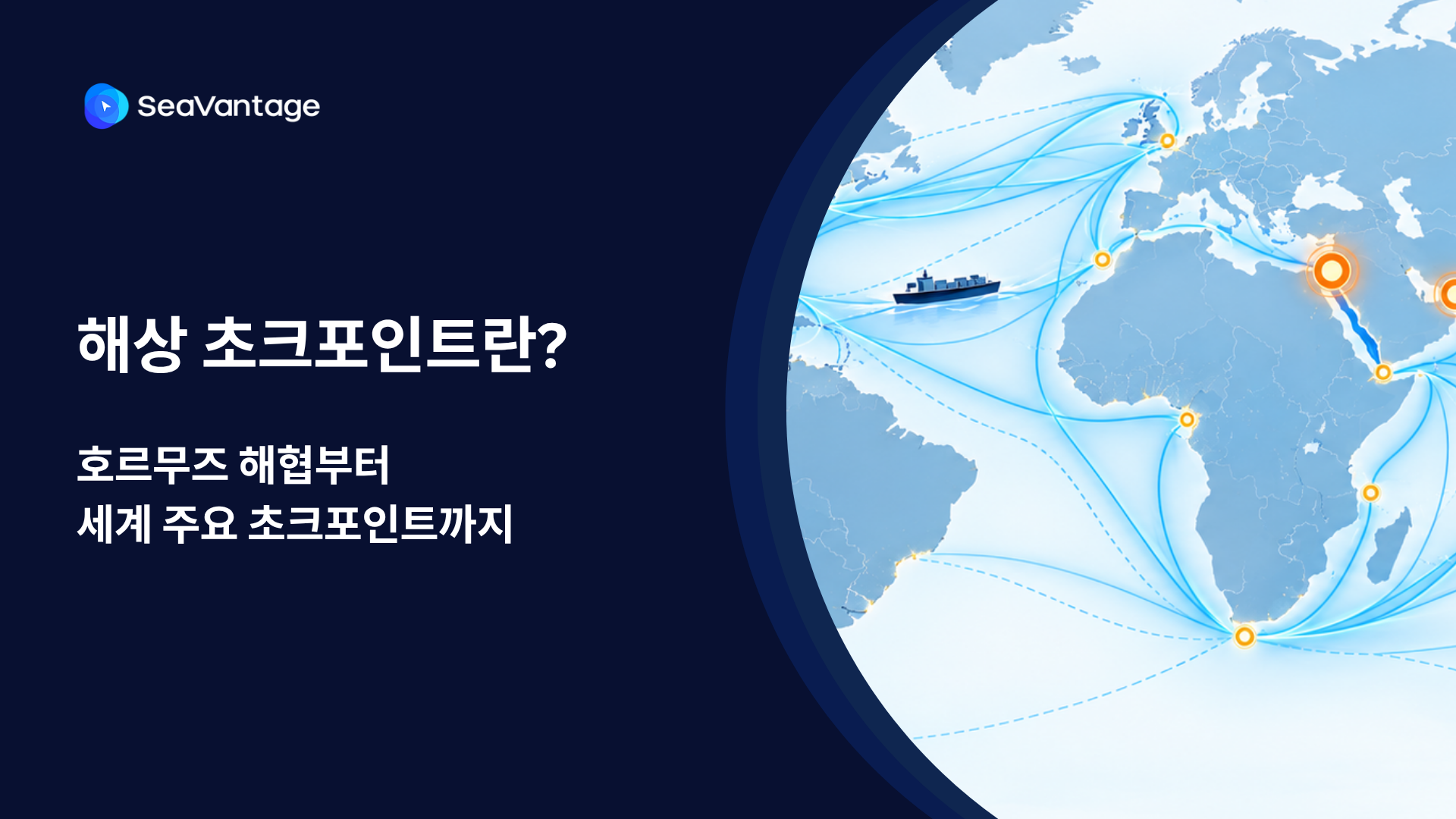

팬스타 아크로호가 지난 8월 22일 북극항로 시범운항을 시작했습니다. 국내 최초 컨테이너선 북극항로 운항 현황과 상업성 검증 항목, 화주·포워더가 주목할 사항을 정리합니다.
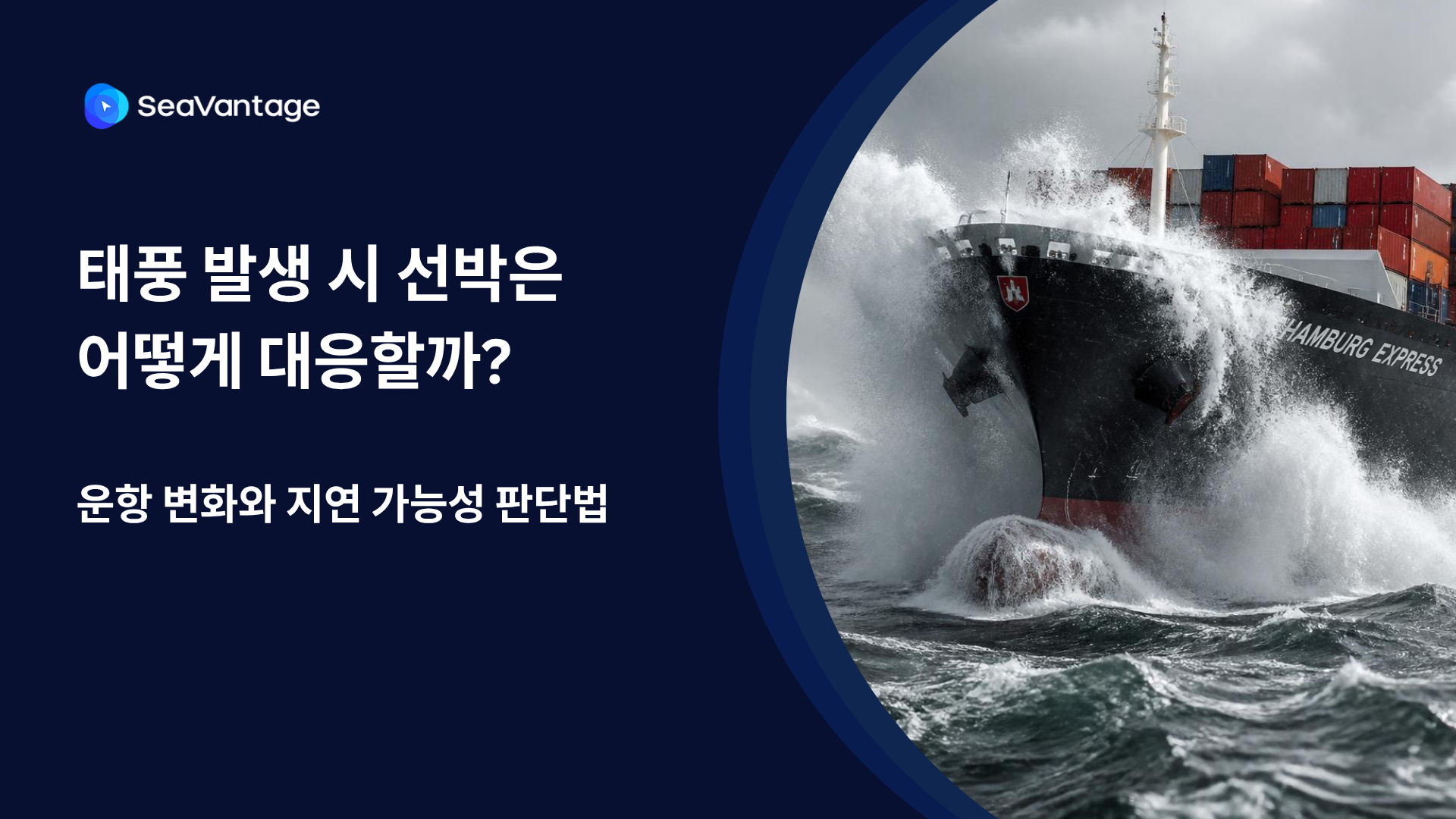
태풍 발생 시 선박은 우회·감속·대기 등 서로 다르게 대응합니다. AIS 항적과 ETA·PTA·PTB, 항만 혼잡 데이터를 활용해 해상운송 지연 가능성을 판단하는 방법을 알아보세요.
Need a SeaRates alternative? See how SeaVantage Cargo Insight supports container tracking, predicted arrivals, shipment milestones, and API access.
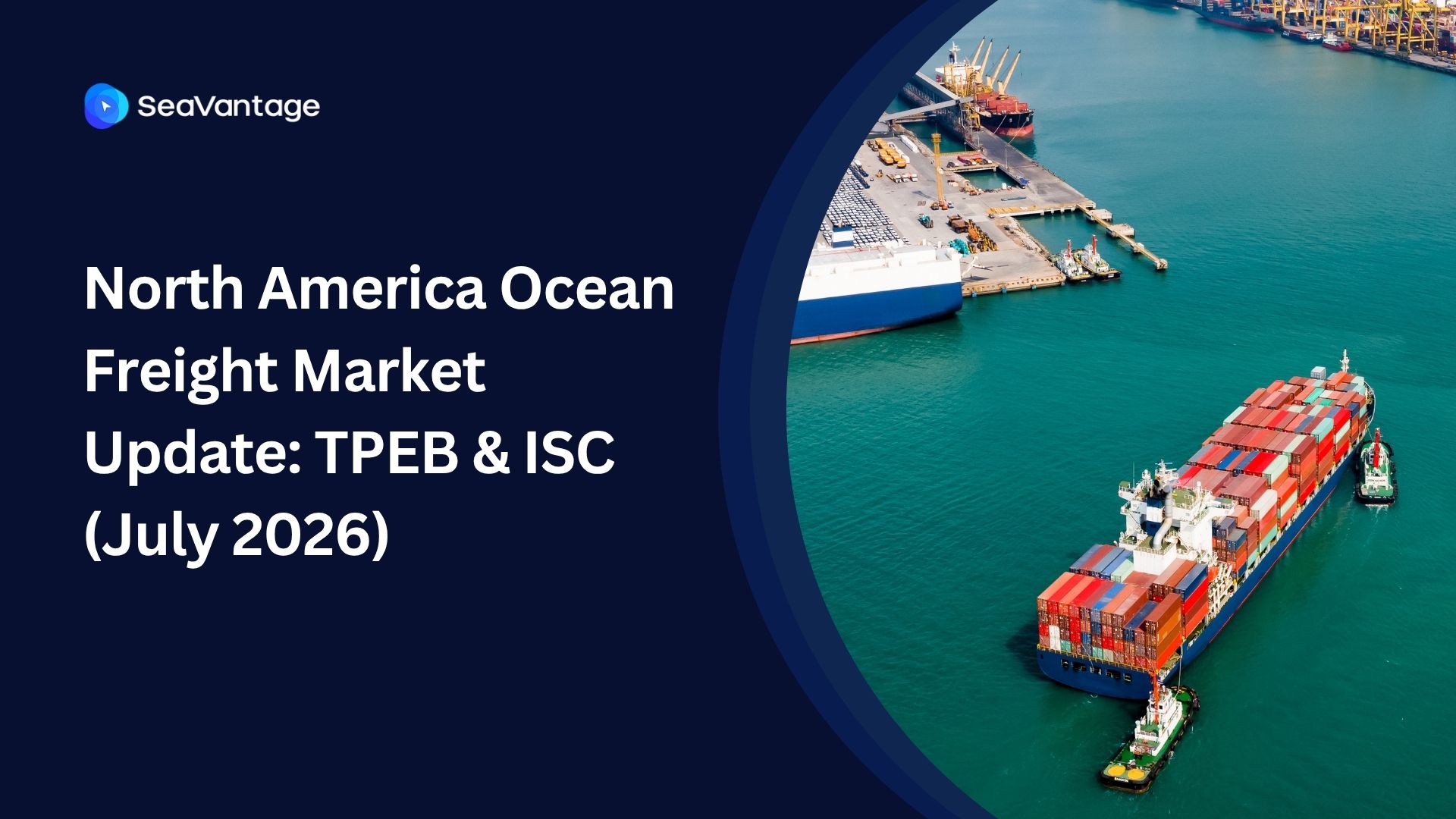
TPEB rates 2026, Indian Subcontinent ocean freight capacity, Strait of Hormuz shipping disruption, schedule reliability ocean carriers
What's driving ocean freight peak season 2026 — rates, surcharges, booking windows, and how to avoid missed inventory deadlines.

.png)


