


How Real-Time Container Tracking Tools Reduce Ocean Freight Delays
.jpg)
Summary
Real-time container tracking tools reduce ocean freight delays by providing live shipment visibility, predictive ETA updates, automated exception alerts, and port congestion data. This allows shippers and logistics teams to respond proactively to disruptions — before delays cascade into missed deadlines, stockouts, or detention fees.
Why Ocean Freight Delays Happen
Ocean freight is the backbone of global trade, but it is also one of the most delay-prone modes of transport. According to Sea-Intelligence, only about 50–60% of ocean shipments arrive on schedule in any given quarter — and that figure dropped below 40% during peak pandemic disruption years.
Delays compound quickly. A vessel schedule change triggers a missed port call, which causes an equipment rollover, which delays customs release, which results in detention charges — all before the shipper even knows there is a problem. The root causes fall into a few predictable categories:
- Port congestion — vessel queues, berth unavailability, and labor disruptions at origin or destination ports
- Carrier schedule reliability — blank sailings, vessel rotations, and alliance changes that alter original routing
- Weather events — storms, typhoons, and routing around severe conditions in the Pacific and Atlantic
- Customs holds — documentation errors, trade compliance flags, or regulatory inspections
- Equipment shortages — container and chassis availability gaps at inland depots and ports
- Transshipment delays — missed feeder connections at hub ports like Singapore, Rotterdam, or Algeciras
Key Stats:
- 50% — Average on-time ocean freight delivery rate, 2023–2024
- 5.4 days — Average delay per disrupted shipment
- $1,200 — Estimated cost per TEU in detention and demurrage annually
- 72 hours — Typical lag before shippers learn of a delay without visibility tools
How Real-Time Container Tracking Tools Work
Modern container tracking platforms aggregate data from multiple sources to give shippers a single, continuously updated view of every shipment. The best platforms combine:
- AIS (Automatic Identification System) vessel data — GPS positioning of vessels updated every few minutes, enabling precise vessel location and speed monitoring
- Carrier EDI and API feeds — direct event data from ocean carriers including gate-in, loaded on board, transshipment, and discharge milestones
- Port authority and terminal data — berth scheduling, vessel queue depth, and terminal processing times
- B/L and booking data — master booking details cross-referenced with carrier event streams
- Historical performance benchmarks — port-pair and carrier lane performance data used to calibrate predictive ETAs
The output is a live tracking dashboard where logistics teams can see vessel position, confirmed milestone events, predictive ETAs, and exception flags — all without logging into individual carrier portals or chasing emails.
⚠️ The ETA problem: Carrier-issued ETAs are static estimates that frequently go stale after issuance. A vessel delayed 72 hours in a port queue may still show the original ETA in the carrier portal until the carrier manually updates it — often after the damage is done. Visibility platforms recalculate ETAs continuously using live vessel and port data.
6 Ways Real-Time Tracking Tools Reduce Ocean Freight Delays
The value of visibility isn't just knowing where a container is — it's what you can do with that information. Here are the six primary mechanisms through which tracking tools reduce the impact of ocean freight delays.
1. Proactive exception management
Tracking platforms generate automated alerts when a shipment deviates from its expected milestone schedule — a vessel delay, a missed transshipment, or a rolling event. Teams are notified hours or days before a delay becomes visible in standard carrier portals, allowing them to act: rebook, expedite, or notify downstream stakeholders before the situation escalates.
2. Predictive ETA accuracy
Rather than relying on carrier-published ETAs — which are often stale — visibility platforms generate dynamic predicted ETAs based on live vessel speed, port congestion levels, and historical lane performance. These predictive ETAs are materially more accurate in the 3–10 day window before arrival: the window that matters most for scheduling trucks, warehouse labor, and customs brokers.
3. Port congestion intelligence
Real-time visibility into vessel queues and terminal dwell times lets logistics teams assess congestion at destination ports. If a major port is experiencing exceptional delays, shippers can evaluate alternative discharge ports, inland rerouting, or temporary storage arrangements before the vessel arrives — converting reactive scrambling into a deliberate contingency.
4. Faster customs and documentation processing
When teams know a vessel's accurate ETA days in advance, customs brokers can complete advance filing, handle ISF requirements, and resolve any classification or valuation queries before the vessel berths. Eliminating documentation-driven customs holds removes a delay source that is entirely within the shipper's control.
5. Drayage and last-mile coordination
Accurate, real-time ETAs allow drayage carriers and transloading facilities to schedule container pickup with precision. This reduces port dwell time after containers are made available — the primary driver of detention fees — and ensures warehouse labor is scheduled correctly, reducing costly idle time.
6. Carrier performance benchmarking
Over time, tracking platforms generate a rich dataset of carrier on-time performance, schedule reliability, and transit time variance by lane. Shippers who analyze this data can make more informed booking decisions — selecting carriers and routing combinations that historically perform better on their critical trade lanes, structurally reducing delay frequency.
Impact on Detention and Demurrage Charges
Detention and demurrage (D&D) fees are among the most controllable — and most commonly overlooked — cost drivers in ocean freight. They are triggered when containers sit beyond their free-time allowance at the terminal (demurrage) or when equipment is held beyond its allowed return window (detention).
The direct connection to tracking is straightforward: the earlier a team knows a container is available, the faster they can mobilize for pickup, and the less likely they are to burn through free time. Real-time tracking tools address D&D through three mechanisms:
- Container availability alerts — instant notification when a container is discharged and cleared for pickup, versus learning about it through manual port-system checks that happen once per day
- Accurate free-time countdowns — visibility platforms track actual free-time expiry dates by container, flagging risk before fees are triggered rather than after invoices arrive
- D&D dispute documentation — when fees are incorrectly applied, tracking event logs provide timestamped evidence to support disputes with carriers and terminals
✅ Industry benchmark: Shippers who implement container visibility platforms report 25–40% reductions in detention and demurrage exposure within the first year, primarily driven by faster pickup coordination and fewer missed free-time windows — not by negotiating better free-time terms.
What to Look for in a Real-Time Tracking Platform
Not all container tracking tools deliver the same depth of data or the same operational value. When evaluating platforms, prioritize the following:
Data coverage and carrier connectivityLook for direct API integrations with the top 20 ocean carriers — not screen-scraping workarounds — and confirmation that AIS data gaps are filled through multiple vessel data providers rather than a single source.
Predictive ETA qualityAsk vendors for ETA accuracy metrics. How far in advance does their predicted ETA diverge from actual arrival? Platforms that publish this data transparently and measure it by lane and carrier are more likely to deliver actionable predictions.
Exception alerting and configurabilityGeneric alerts are noise. The best platforms allow teams to configure alert thresholds — for example, flagging only delays exceeding 48 hours on a specific origin-destination lane — and route alerts to the right team member based on shipment type or customer.
Integration with TMS and ERP systemsA platform that pushes milestone events and updated ETAs directly into your TMS, ERP, or WMS eliminates duplicate data entry and ensures downstream planning tools are always working from current information.
Historical analytics and carrier scorecarding. Look for platforms that provide lane-level on-time performance reports, transit time distribution data, and carrier comparison views across your contracted trade lanes.
Frequently Asked Questions
How quickly can real-time tracking tools detect a delay?
Most enterprise-grade tracking platforms update vessel position data every 5–15 minutes via AIS. Carrier milestone events are typically surfaced within 1–4 hours of the carrier system updating — compared to 24–72 hours through manual monitoring.
Can tracking tools help with LCL (less than container load) shipments?
Yes, though LCL tracking is typically less granular than FCL, since individual cargo isn't tracked — only the consolidation vessel and container. Leading platforms surface vessel-level milestones for LCL bookings and can flag delay events at the vessel level.
What data do I need to start tracking containers?
At minimum, you need a booking number or bill of lading (B/L) number. Most platforms also accept container numbers, SCAC codes, and port of loading and discharge to improve match accuracy. Enterprise integrations can auto-ingest booking data from your TMS to eliminate manual entry entirely.
Do tracking platforms work for all shipping lanes?
Global AIS coverage is comprehensive on major trade lanes (Trans-Pacific, Trans-Atlantic, Asia-Europe). Coverage is thinner in certain coastal and inland waterway segments. Leading platforms supplement AIS with carrier EDI data to fill vessel position gaps in lower-coverage regions.
Is real-time container tracking worth the cost for mid-size importers?
For most importers shipping 200+ TEUs per year, the ROI on a visibility platform is typically positive within 6–12 months, driven by D&D savings, reduced manual tracking labor, and avoided stockout costs. Many mid-market platforms are priced per-shipment or per-container, making cost proportional to volume.
The Bottom Line
Ocean freight delays are not fully preventable — but their impact on your operations, costs, and customer relationships is highly manageable when you have accurate, timely information. Real-time container tracking tools shift logistics teams from reactive to proactive, replacing the 72-hour lag of discovery with continuous, actionable intelligence.
The compounding effect matters: faster exception alerts mean earlier drayage rescheduling, which means fewer detention days, which means lower fees and better on-shelf availability. Every hour of lead time a visibility platform provides translates directly into operational and financial value.
For supply chains where ocean freight reliability is a competitive variable — which is nearly every import-dependent business — real-time visibility is no longer optional infrastructure. It is table stakes.
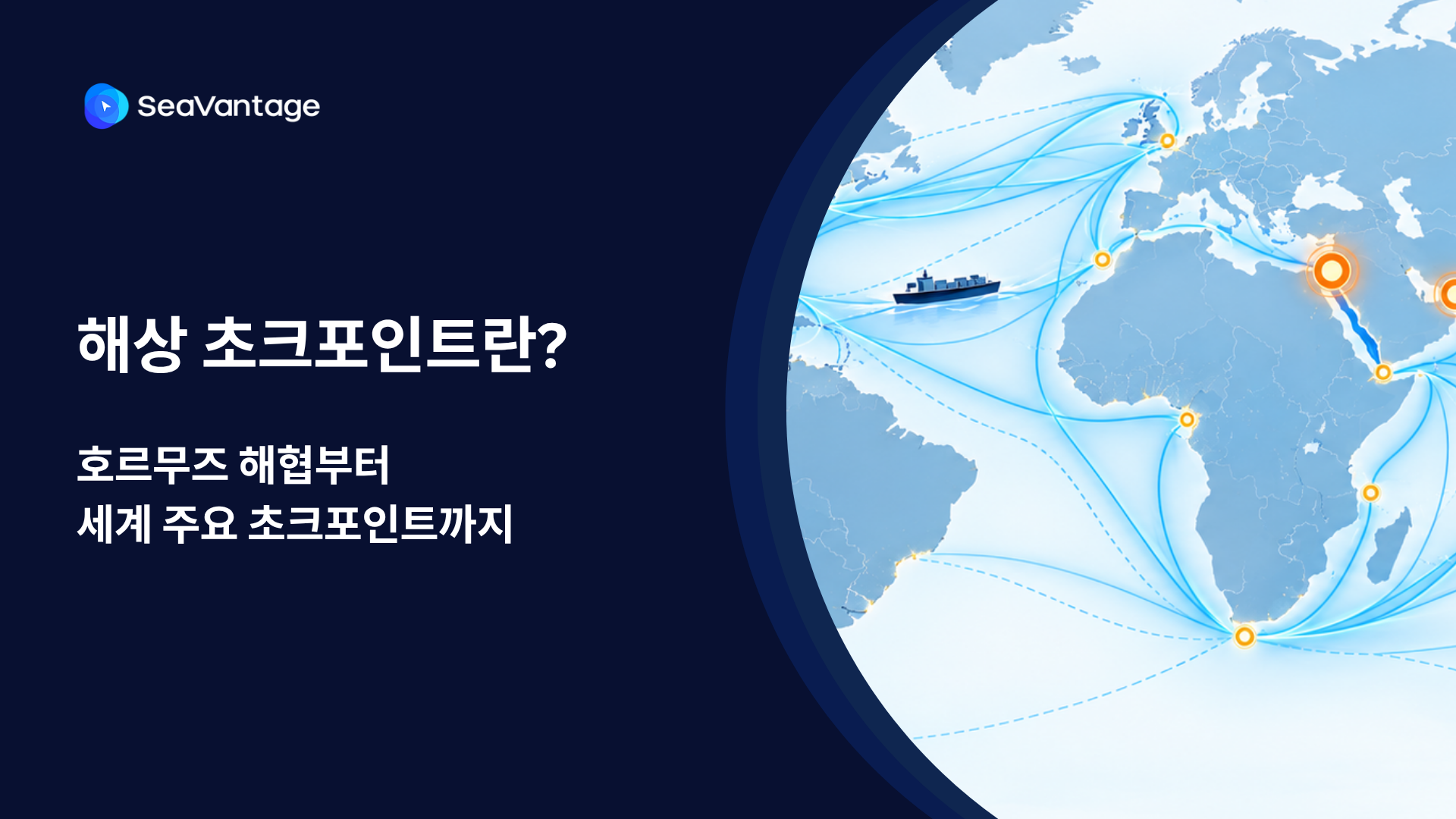

팬스타 아크로호가 지난 8월 22일 북극항로 시범운항을 시작했습니다. 국내 최초 컨테이너선 북극항로 운항 현황과 상업성 검증 항목, 화주·포워더가 주목할 사항을 정리합니다.
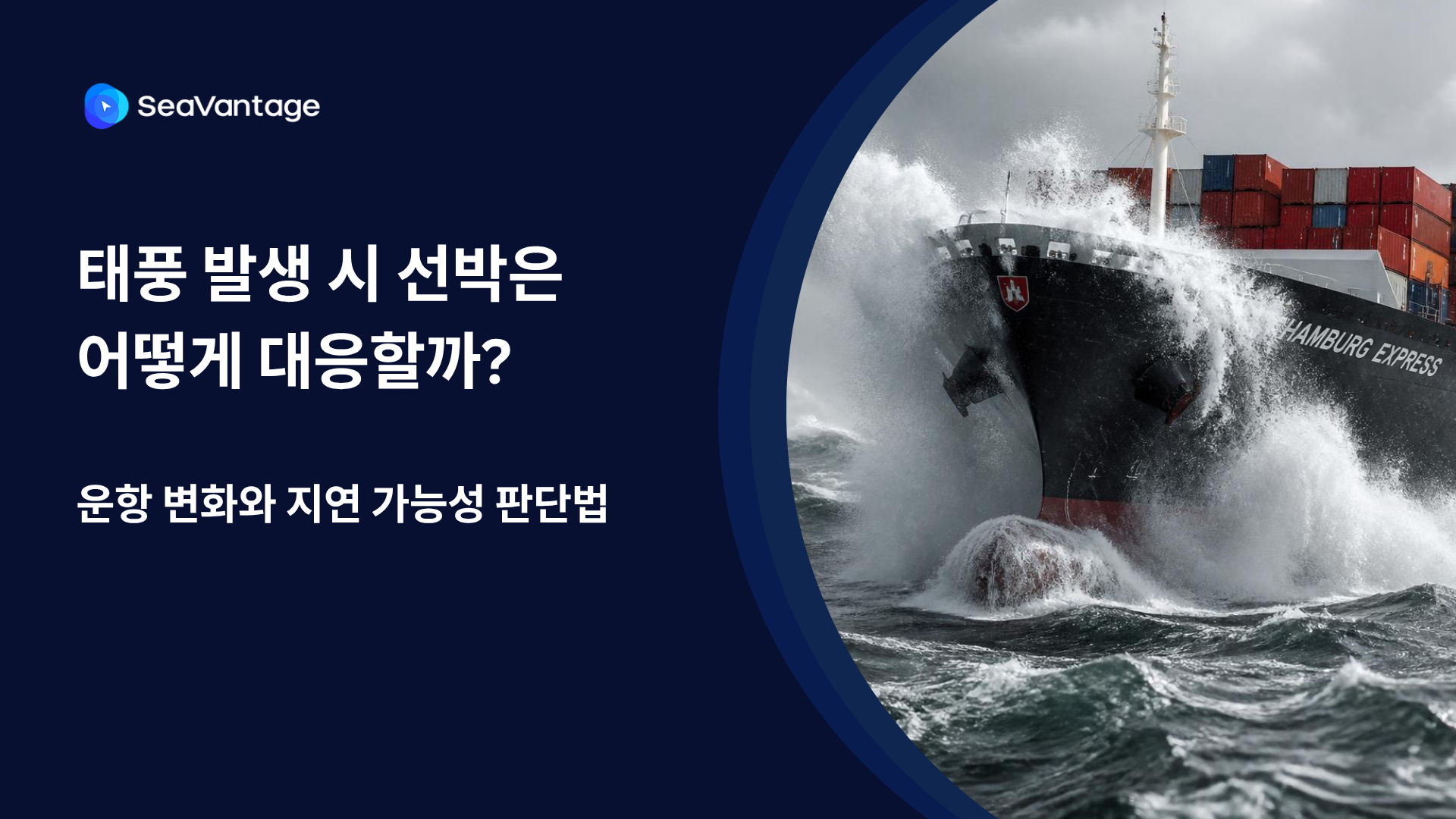
태풍 발생 시 선박은 우회·감속·대기 등 서로 다르게 대응합니다. AIS 항적과 ETA·PTA·PTB, 항만 혼잡 데이터를 활용해 해상운송 지연 가능성을 판단하는 방법을 알아보세요.
Need a SeaRates alternative? See how SeaVantage Cargo Insight supports container tracking, predicted arrivals, shipment milestones, and API access.
TPEB rates 2026, Indian Subcontinent ocean freight capacity, Strait of Hormuz shipping disruption, schedule reliability ocean carriers
What's driving ocean freight peak season 2026 — rates, surcharges, booking windows, and how to avoid missed inventory deadlines.

.png)


