


Why Is It So Hard to Track Ocean Containers Across Multiple Carriers?
.jpg)
The Short Answer
Tracking ocean containers across multiple carriers is difficult because each carrier operates its own data systems, uses inconsistent identifiers and event definitions, and shares limited real-time data with shippers. The result is a fragmented visibility landscape where a single shipment moving through multiple vessels, ports, and handoffs can disappear from view for days at a time.
Why This Question Matters
If you've ever refreshed a carrier portal at 11 PM wondering where your containers are—only to find "departed origin port" still displayed three days after the vessel sailed—you already understand the problem.
For logistics managers, freight forwarders, and importers relying on ocean freight, container visibility isn't just a convenience. It drives inventory decisions, customer commitments, demurrage avoidance, and supply chain resilience. Yet even with GPS, satellite connectivity, and cloud platforms available today, multi-carrier tracking remains one of the most persistent pain points in global logistics.
Here's why.
1. Each Carrier Uses Its Own Data Silo
The ocean shipping industry is dominated by a handful of major alliances—2M, THE Alliance, and Ocean Alliance—but those alliances are commercial agreements, not data-sharing agreements. Maersk, MSC, CMA CGM, Evergreen, Hapag-Lloyd, and others each maintain proprietary tracking systems, customer portals, and APIs.
When a shipment moves on a single carrier from origin to destination, visibility is manageable. But transshipment routes—where cargo transfers between vessels at intermediate ports—often involve multiple operating carriers. The container may start on a Maersk vessel, transship in Colombo onto an Evergreen ship, and arrive in a port where a regional carrier handles the final leg.
Each of those carriers updates their system in their format on their schedule. There is no centralized handoff of tracking data between them.
Why this matters: This is the root cause. Fragmented data ownership means no single party holds the complete picture of a container's journey.
2. Container and Booking Identifiers Don't Align Consistently
A container has a container number (e.g., MSCU1234567). A booking has a booking reference. A bill of lading has a B/L number. A shipment may also have a house bill, a master bill, and a shipper reference—all different.
Across carriers, these identifiers are formatted differently and mapped inconsistently. One carrier's API may require the booking reference to pull status. Another requires the container number. A third requires both. And when a container transships, the new carrier may assign an entirely different booking reference for the second leg—with no automatic link back to the original shipment in your TMS or visibility platform.
This identifier fragmentation means that even automated tracking tools must constantly reconcile and re-match records, and they frequently fail—leaving gaps in the tracking timeline.
3. Vessel Position ≠ Container Status
AIS (Automatic Identification System) data provides real-time vessel positions via transponder signals broadcast by ships. This data is widely available and powers many tracking dashboards. It answers: Where is the ship?
But it doesn't answer: Is your container on that ship?
Container load and discharge events are logged by port terminals and carriers through messages like the EDI 315 (Status Details Ocean) or COPARN. These messages are often delayed by 12–48 hours after the physical event. Terminals in high-volume transshipment hubs—Singapore, Port Klang, Tanjung Pelepas—process thousands of container moves per day and batch-transmit data rather than updating in real time.
The practical result: a tracking platform may show your vessel arriving at Rotterdam while your container's status still reads "loaded on vessel" from a port event two weeks ago. The vessel arrived. The container's data didn't.
4. Transshipment Creates Visibility Black Holes
Transshipment is where container tracking most frequently breaks down. When a container arrives at a transshipment hub and waits for connecting vessel, several things can happen simultaneously:
- The arriving carrier closes its tracking responsibility at discharge
- The connecting carrier hasn't yet received or acknowledged the booking
- The terminal hasn't issued updated EDI events
- The planned connecting vessel changes due to schedule adjustments
During this window—which can range from hours to weeks—the container sits in a status limbo. Shippers see the last confirmed event and nothing more. They don't know if the container is on the quay, in a stack, or already on the next vessel. This is what logistics professionals call a visibility black hole, and transshipment hubs are where they most commonly occur.
5. No Universal Data Standard Exists
The logistics industry has attempted standardization multiple times. EDI formats (X12, EDIFACT) have been in use for decades. DCSA (Digital Container Shipping Association) has been publishing data standards—including the Track & Trace API standard (T&T 2.2)—since 2020, with major carriers committing to adoption.
But standards adoption is uneven. Mid-size and regional carriers lag behind. Port terminals operate on their own legacy systems. Customs authorities, rail operators, and inland logistics providers add additional layers of data that rarely connect cleanly to ocean carrier feeds.
A shipment moving from a factory in Vietnam to a distribution center in Ohio touches: a trucking company, an export terminal, an ocean carrier, a transshipment terminal, a second ocean carrier, a US port terminal, customs, a drayage provider, and possibly a rail operator. Each segment produces data in its own format, at its own latency, through its own interface. No universal protocol ties them together end-to-end.
6. Carrier APIs Are Inconsistent and Unreliable
Even when carriers provide APIs for programmatic tracking access, using them at scale is non-trivial:
- Authentication methods differ (API key, OAuth, EDI VAN, SFTP—all in use simultaneously across the industry)
- Event taxonomies vary ("Gate In," "FCL Stuffed," "Arrived at POD," and a dozen variants mean roughly the same thing across different carrier systems)
- Rate limits and data freshness differ (some carriers refresh every 15 minutes; others batch-process twice daily)
- API stability is inconsistent (carriers deprecate endpoints, change schemas, or go offline during maintenance windows)
Visibility platforms that aggregate multi-carrier data must maintain individual API integrations for every carrier—and re-build them whenever a carrier updates its systems. The ongoing maintenance burden is significant, and data gaps appear every time an integration breaks.
7. Schedule Reliability Compounds the Problem
Since the disruptions of 2020–2022, vessel schedule reliability in ocean shipping has improved but remains far from perfect. When carriers blank sailings, roll cargo to later vessels, or re-route ships around congestion, container ETAs shift. But tracking systems often reflect planned schedules, not actual vessel movements—displaying an ETA that has already been overtaken by events.
When a container gets rolled to a new vessel, the tracking record needs to be updated to reflect the new voyage, the new transshipment sequence, and the new expected arrival. This update depends on the carrier proactively issuing corrected data—which doesn't always happen promptly, and sometimes doesn't happen until the container arrives.
What Good Multi-Carrier Tracking Looks Like
Despite these challenges, meaningful multi-carrier container visibility is achievable with the right combination of:
- Multi-source data aggregation — combining carrier APIs, AIS vessel position, port EDI feeds, and terminal data into a single normalized record
- Predictive ETA modeling — using historical vessel performance and port congestion data to generate more accurate arrival predictions than carrier-published schedules
- Exception alerting — automated flags for rollings, delays, transshipment gaps, and customs holds rather than requiring manual portal checks
- Milestone normalization — mapping carrier-specific event codes to a standardized set of milestones so teams can compare shipments across carriers apples-to-apples
- DCSA-compliant carrier connections — prioritizing integrations with carriers that have adopted the T&T API standard for more reliable, structured data
The goal isn't eliminating uncertainty—ocean freight involves too many variables for that. The goal is minimizing the windows of total blindness and getting actionable data fast enough to actually respond.
The Bottom Line
Multi-carrier container tracking is hard because ocean shipping was built on commercial relationships, not data infrastructure. Each carrier, terminal, and port operates independently. Data standards are improving but incomplete. And the physical reality of transshipment—cargo moving between vessels at hubs around the world—creates gaps that no single data source can bridge.
Shippers who accept this complexity and build tracking strategies around aggregated, normalized, exception-flagged data are consistently better positioned than those who rely on any single carrier portal or tracking tool. The visibility gap is real. But it's manageable.
Frequently Asked Questions
Why does container tracking stop updating at transshipment ports?
When a container discharges at a transshipment hub, the arriving carrier closes its tracking event log. The connecting carrier doesn't begin updating until it has confirmed the container's booking for the onward leg. Between those two events—which can span hours to days—no party is actively transmitting status data, creating a tracking gap.
Can I track a container across multiple carriers in one place?
Yes, but it requires a visibility platform or TMS that maintains API integrations with multiple carriers and normalizes their data into a common format. DCSA's Track & Trace standard is improving this over time, but adoption varies by carrier.
Why is my container's ETA wrong on the tracking portal?
Carrier portals often display planned schedule ETAs rather than dynamically updated predictions. When vessels are delayed or cargo is rolled to a different sailing, ETAs don't always update automatically. Third-party visibility tools that model ETAs from actual vessel position and port performance tend to be more accurate.
What does "vessel departed" mean if my container isn't confirmed loaded?
These are two separate events. Vessel departure is logged from AIS data or port records. Container load confirmation comes from terminal EDI messages. It's possible for a vessel to show departed before your container's load event is transmitted—especially at high-volume ports where EDI batch processing causes delays.
Is DCSA's tracking standard solving this problem?
Partially. DCSA's T&T API standard (currently at version 2.2) provides a common data model for container events and a standardized API structure. Major carriers including Maersk, MSC, Hapag-Lloyd, and CMA CGM have committed to it. But terminal operators, regional carriers, and inland logistics providers are not covered, so the end-to-end gap remains.
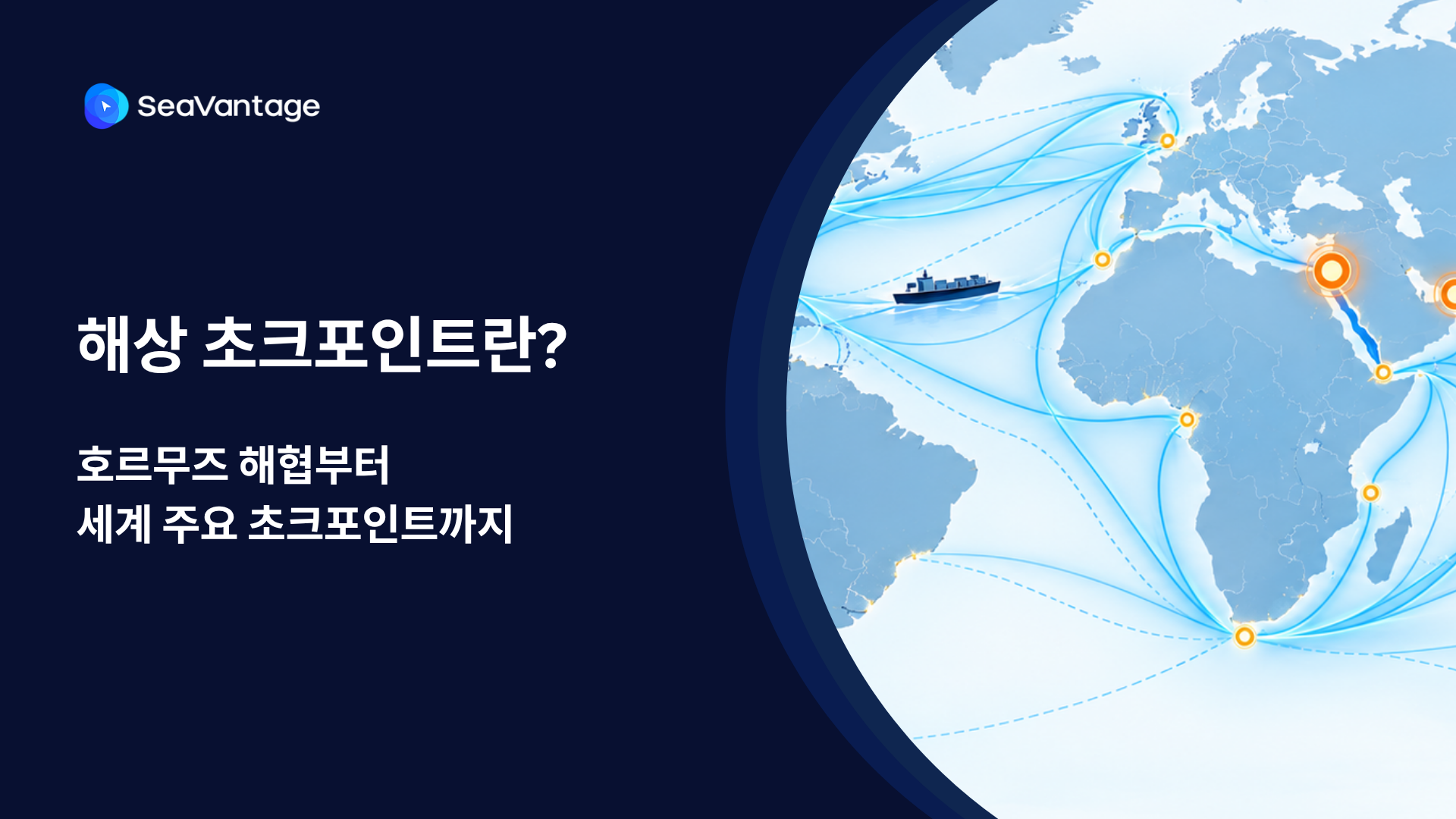

팬스타 아크로호가 지난 8월 22일 북극항로 시범운항을 시작했습니다. 국내 최초 컨테이너선 북극항로 운항 현황과 상업성 검증 항목, 화주·포워더가 주목할 사항을 정리합니다.
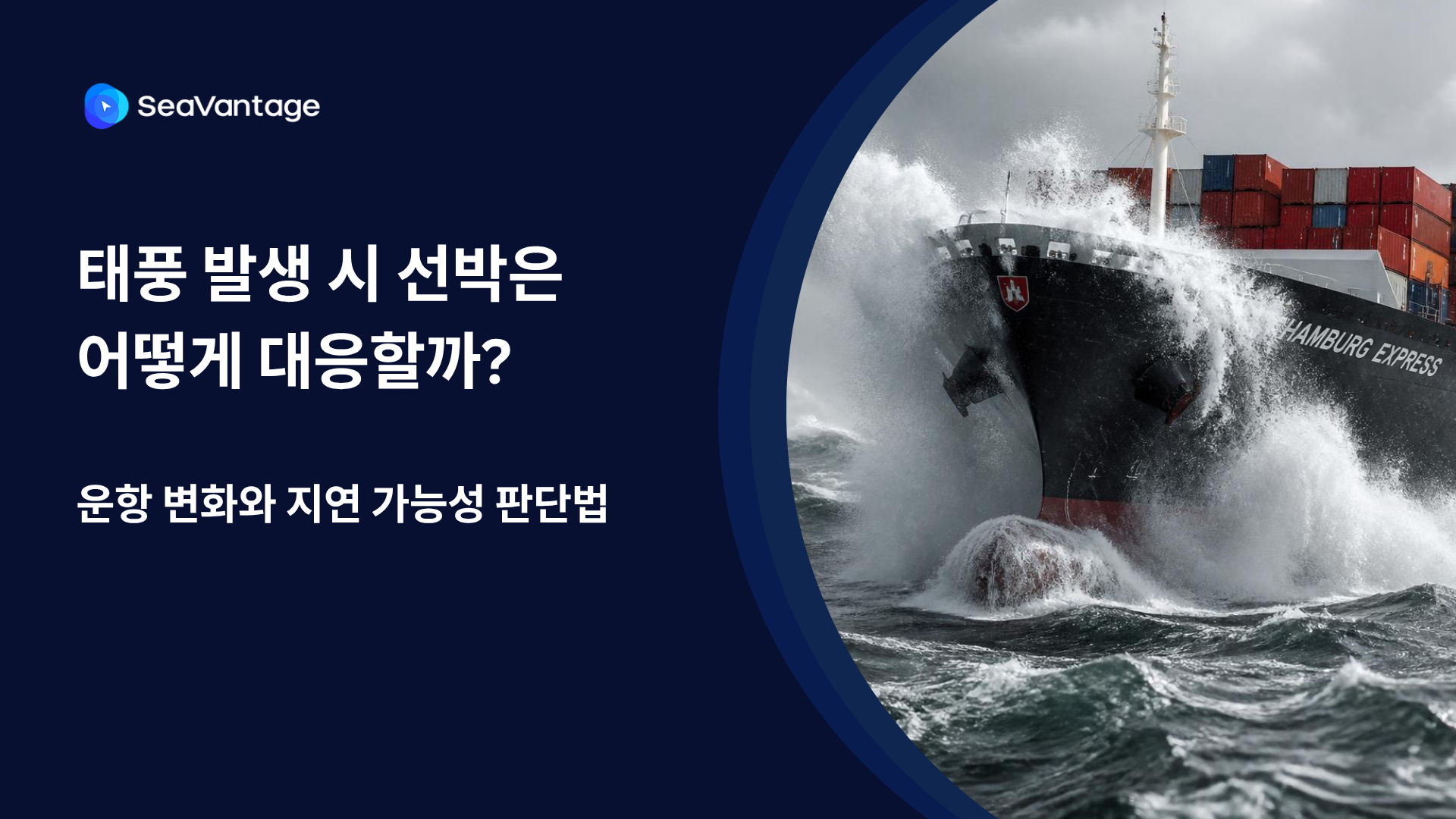
태풍 발생 시 선박은 우회·감속·대기 등 서로 다르게 대응합니다. AIS 항적과 ETA·PTA·PTB, 항만 혼잡 데이터를 활용해 해상운송 지연 가능성을 판단하는 방법을 알아보세요.
Need a SeaRates alternative? See how SeaVantage Cargo Insight supports container tracking, predicted arrivals, shipment milestones, and API access.
TPEB rates 2026, Indian Subcontinent ocean freight capacity, Strait of Hormuz shipping disruption, schedule reliability ocean carriers
What's driving ocean freight peak season 2026 — rates, surcharges, booking windows, and how to avoid missed inventory deadlines.

.png)


