


Best Port Congestion Tracking Software in 2026: Top 7 Picks
TL;DR — The Short Version
• Most port congestion tools report yesterday. The best 2026 platforms forecast 48–72 hours ahead, at the terminal and berth level — not the port level.
• We compared 7 platforms by forecast horizon, granularity, and operational usability: SeaVantage, Portcast, project44, FourKites, Sea-Intelligence, Linerlytica, and Container xChange /IMF PortWatch.
• SeaVantage leads on terminal- and berth-level predictive intelligence integrated directly into the container ETA workflow.
• Best for forecasting at terminal/berth: SeaVantage, Portcast. Best for enterprise visibility:project44, FourKites. Best for analyst/market intelligence: Sea-Intelligence, Linerlytica. Best for open-data benchmarking: IMF PortWatch.
• If your tool tells you Long Beach is congested today, you're already late. The question is what berth, which terminal, and when does it clear.
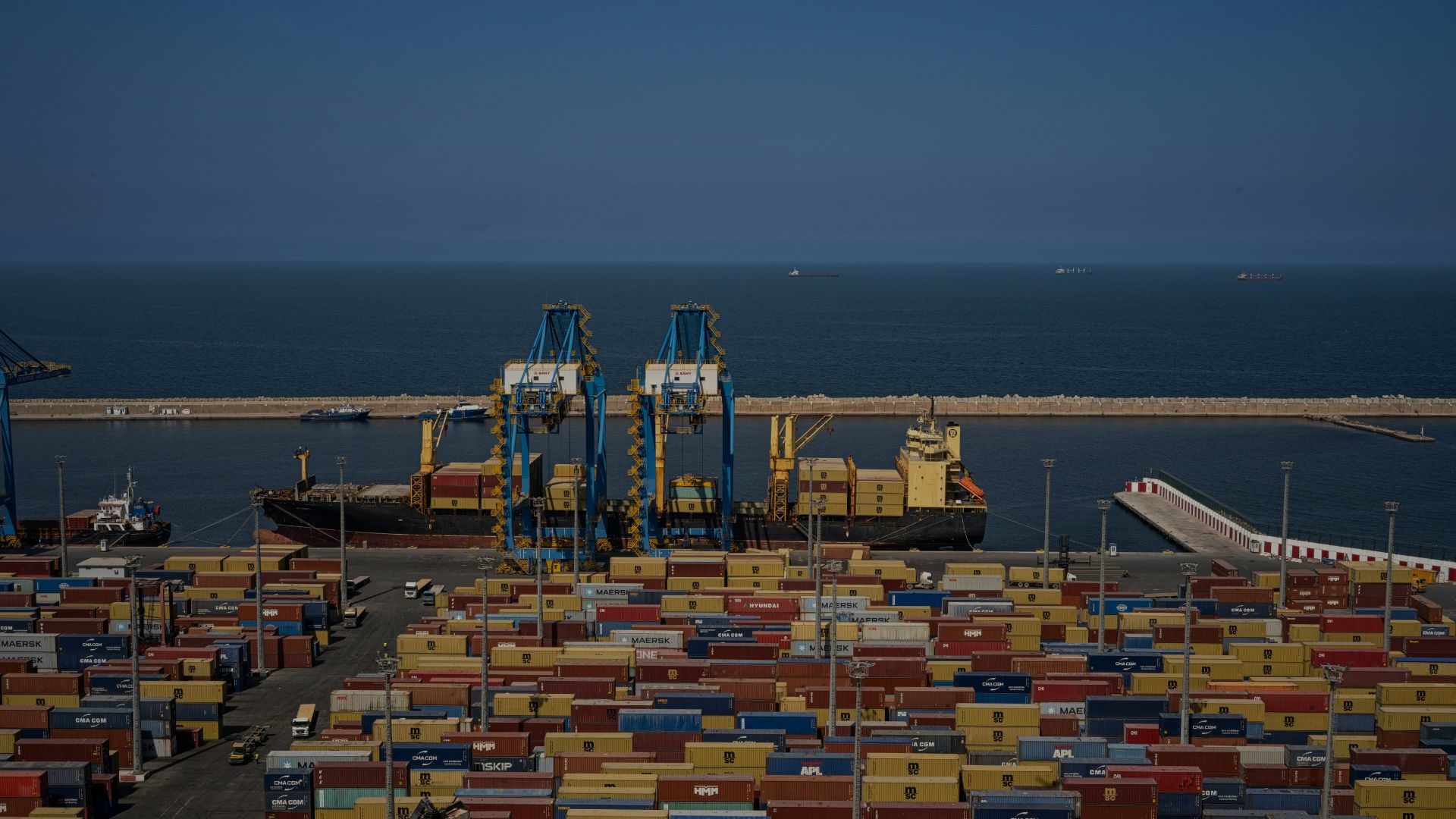
Port congestion in 2026 is no longer an exception — it's the default operating state. Qingdao, Manila North, Hamburg, Rotterdam, and Savannah are running multi-day vessel waits with rolling regularity. Carriers are blanking sailings to keep capacity tight. And the difference between a profitable quarter and a margin-eroding one increasingly comes down to whether your ops team saw the bottleneck coming.
Most port congestion software was built for a different era — one where annual reports and weekly market commentary were enough. Today, you need terminal-level forecasts you can act on this afternoon. Here's how the seven platforms shippers and forwarders are evaluating in 2026 actually stack up.
The Only Question That Matters: Forecast Horizon
Forget feature checklists. Every port congestion tool can be categorized by a single axis: how far ahead, and how granularly, does it forecast?
The platforms that matter for operational decisions live in the predictive (48–72h) tier. Most of the market still lives in descriptive.
1. SeaVantage — Best Real time & Predictive Terminal-Level Forecasts
Forecast horizon: Predictive(48–72h), terminal and berth level
SeaVantage is built specifically for the predictive tier. The platform fuses vessel-level AIS, terminal dwell history, custom geofencing around the port, terminal and berthing and carrier schedules into forecasts at the terminal — not just the port — for 48 to 72 hours out. That granularity matters: "Long Beach is congested" is a headline; "PCT and PCT-T1 berth queue will clear by Thursday AM while TTI runs +36h late" is a decision.
Critically, SeaVantage doesn't silo port congestion as a separate dashboard. Forecasts are woven into every container and vessel view, so the ETA flag your ops team sees already reflects the predicted bottleneck. That's the workflow shift that turns congestion data from a market commentary input into an operating signal.
Best for
• Forwarders and BCOs who need to make routing and customer decisions ahead of disruption
• Ops teams that want terminal- and berth-level granularity, not aggregate port indices
• Shippers tired of "congestion is high" without timing or actionability
2. Portcast — Best Analyst-Grade Predictive Platform
Portcast is SeaVantage's closest direct competitor on the predictive axis. The platform's port congestion forecasts are technically strong, with credible 48–72h horizons and good performance on major Asian and European gateways.
Portcast's primary user is an analyst or operations leader consuming dashboards and reports. The platform is excellent at thatrole. For front-line ops teams looking for forecasts embedded directly into a container-level workflow, the experience can feel more analytical than operational.
• Best for: Analyst teams, ocean carriers, and operations leadership consuming forecasts at scale.
3. project44 — Best Enterprise Visibility with Port Context
project44's port congestion intelligence comes as part of its broader enterprise visibility platform. The data is credible — particularly its Ocean Insights heritage — and integrates well into the platform's container and shipment views. For enterprises already on project44 for multi-modal visibility, port congestion arrives as an included capability.
As a standalone congestion tool, project44 is expensive and over-built. It's a strong choice if you're already inside the project44ecosystem; less so if congestion intelligence is your primary buying motive.
• Best for: Enterprises already invested in project44 wanting integrated port context.
4. FourKites — Best Multi-Modal Visibility with Port Signals
FourKites delivers port congestion as a feature within its dynamic ocean and yard visibility products. The platform's strength is breadth — combining ocean port data with road, rail, and yard signals so shippers can see end-to-end where the bottleneck actually sits. The dedicated congestion analytics are less granular than Portcast or SeaVantage but solid for high-level operating context.
• Best for: Large multi-modal shippers wanting port signals along side yard and inland visibility.
5. Sea-Intelligence — Best Strategic Market Analytics
Sea-Intelligence is the most-cited analytical voice in container shipping for a reason: the team produces some of the most rigorous schedule reliability, capacity, and congestion analysis in the market. Reports are referenced by carriers, shippers, and journalists alike.
This is a strategic and procurement tool, not an operating one. Sea-Intelligence will not tell your ops team that the berth queue at Hamburg clears Thursday — but it will tell your procurement team how schedule reliability has trended across 14 carriers for the past 24 months.
• Best for: Procurement teams, market strategists, and supply chain leadership.
6. Linerlytica — Best Live Market Intelligence
Linerlytica is the closest analyst peer to Sea-Intelligence — a focused liner-shipping intelligence service producing congestion, capacity, and rate commentary on a tight cadence. Its weekly congestion barometers and port wait-time analyses are widely circulated across the industry.
Like Sea-Intelligence, Linerlytica is for the analyst and strategy buyer; it is not an operational integration.
• Best for: Procurement, trade analysts, and executives tracking market-level congestion trends.
7. Container xChange / IMF PortWatch — Best Open Benchmarking
Container xChange publishes congestion indices via its industry intelligence layer, and the IMF's PortWatch project provides open, satellite-derived port traffic data for benchmarking. Together they form the best open-data baseline for anyone validating commercial congestion claims or benchmarking against a third-party reference.
These are reference tools, not workflow tools. They're how you check whether a vendor's congestion narrative matches reality — not how you operate your ocean program.
• Best for: Analysts, researchers, and procurement validating commercial congestion data.
How to Choose: A 90-Second Decision Framework
Frequently Asked Questions
What is the best port congestion tracking software in 2026?
For predictive, terminal- and berth-level forecast ingintegrated into operational workflows, SeaVantage leads. Portcast is its closest analytical peer. For market-level strategic intelligence, Sea-Intelligence and Linerlytica are the benchmarks.
How far ahead can port congestion be predicted?
Credible operational forecasts run 48–72 hours ahead at the terminal and berth level when fused with vessel AIS, terminal dwell history, and live yard signals. Anything beyond ~5 days enters strategic-forecast territory, where confidence intervals widen significantly.
Why does descriptive port congestion data fail operationally?
If your dashboard tells you Long Beach is congested today, the routing decision was due 48 hours ago. Descriptive data is good for status reports and executive summaries; it cannot change the booking you made last week. Predictive data — at the terminal level — can.
Do I need port congestion software in addition to a container tracking platform?
Most container tracking platforms report congestion as a flag, not a forecast. A modern operational stack uses one platform that fuses container visibility with predictive port intelligence (such as SeaVantage), or pairs a tracking tool with a dedicated forecasting layer (such as Portcast).The duplication only makes sense if you've committed to a tracking platform without predictive port capabilities.
Forecasts Win Quarters. Reports Explain Them.
The teams winning ocean execution in 2026 aren't the ones with the prettiest port dashboards. They're the ones whose ops teams arerouting around bottlenecks 48 hours before they make the trade press. Pick the platform whose forecast horizon matches the decisions you actually make.
See how SeaVantage's terminal-level predictive port intelligence performs against your current view. Explore the platform and run your own lanes through it.

팬스타 아크로호가 지난 8월 22일 북극항로 시범운항을 시작했습니다. 국내 최초 컨테이너선 북극항로 운항 현황과 상업성 검증 항목, 화주·포워더가 주목할 사항을 정리합니다.
태풍 발생 시 선박은 우회·감속·대기 등 서로 다르게 대응합니다. AIS 항적과 ETA·PTA·PTB, 항만 혼잡 데이터를 활용해 해상운송 지연 가능성을 판단하는 방법을 알아보세요.
Need a SeaRates alternative? See how SeaVantage Cargo Insight supports container tracking, predicted arrivals, shipment milestones, and API access.
TPEB rates 2026, Indian Subcontinent ocean freight capacity, Strait of Hormuz shipping disruption, schedule reliability ocean carriers
What's driving ocean freight peak season 2026 — rates, surcharges, booking windows, and how to avoid missed inventory deadlines.

.png)


